
By: Shatha Kalel
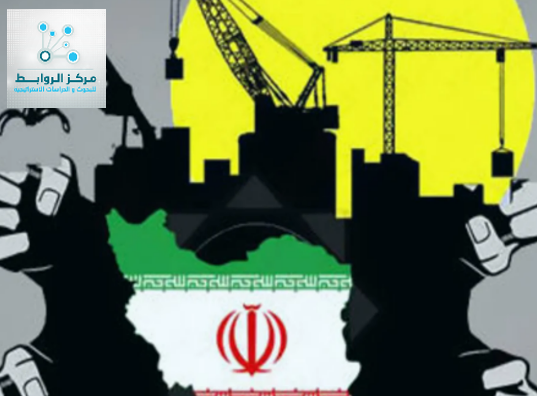
For over four decades, Iran has shaped a unique economic model under the weight of international sanctions and economic blockades. Since the fall of the Shah’s regime in 1979 and the establishment of the Islamic Republic, Tehran has faced unprecedented challenges that forced it to reshape its economic philosophy. Despite recurring crises and fluctuating international relations, Iran has managed to build what is known as a “resistance economy,” which has become a central pillar of its developmental and political strategies
From Revolution to Sanctions: The Formation of a Crisis Economy
Iran’s economic struggles began immediately after the revolution, when the United States froze $12 billion worth of Iranian assets in 1979 in response to the U.S. embassy hostage crisis in Tehran. In the 1980s, Washington and the United Nations imposed a series of sanctions that included bans on arms, technology, and raw materials.
As Iran’s nuclear program advanced in the early 2000s, sanctions tightened further, especially after the UN Security Council imposed strict restrictions in 2006. The crisis peaked when the United States withdrew from the nuclear agreement in 2018, plunging Iran back into economic isolation and blocking major investments in key sectors such as pharmaceuticals, automobiles, and energy .Resistance Economy: A Philosophy of Endurance and Adaptation
In response to these challenges, Supreme Leader Ali Khamenei introduced the “resistance economy” strategy nearly two decades ago. This approach focuses on reducing dependency on foreign sources and boosting domestic production. Key elements of the strategy include:
Energy independence: Building oil refineries to process fuel domestically and export surpluses, reducing Iran’s reliance on gasoline imports.
Food security: Investing in essential crops such as wheat to meet domestic market needs.
Technology and defense: Developing drones, missiles, and satellites using local capabilities.
Diversifying trade partners: Establishing new partnerships with China, India, Turkey, and Iraq, and implementing “oil-for-goods” deals with some Gulf countries. Remarkable Achievements but at a High Cost
Iran has made undeniable progress in some economic indicators. Its non-oil trade reached $130.2 billion in 2024, with exports growing by 15.6%. It has also developed local vaccines to combat the COVID-19 crisis and launched space programs with domestic scientific capacity.
However, the broader picture reveals numerous challenges:
High inflation of 45%, driving prices up by 37%.
High unemployment of 25%, due to weak foreign investments.
A weakened national currency, dropping to 42,000 tomans per U.S. dollar.
Economic stagnation, with weak growth not exceeding 3.4%.
Regional and International Implications
Iran’s economic trajectory has not only impacted its domestic landscape but has also left a clear imprint on:
Global energy markets: Fluctuations in Iranian oil exports directly affect global prices.
International trade patterns: Iran has pivoted eastward toward China and India, partially weakening Western dominance over supply chains.
Geopolitical tensions: Building a domestic industrial and military base has complicated power dynamics in the Middle East.
Conclusion: A Controversial Model
Despite enduring more than four decades of sanctions, Iran’s economy has not collapsed, but it has paid a heavy price for survival. The “resistance economy” model has enabled Tehran to enhance self-sufficiency but has constrained growth and deepened hardship for poorer segments of society.
As global dynamics continue to shift, Iran remains a controversial regional economic player, offering an important lesson for policymakers on the possibilities and limits of self-sufficiency strategies in an interconnected global economy.
Economic Studies Unit / North America Office
Al-Rabetat Center for Research and Strategic Studies