
By Shatha Kalel
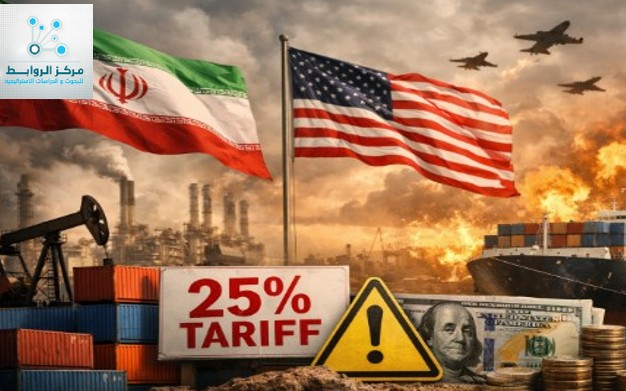
The decision by Donald Trump to issue an executive order threatening tariffs on countries that continue trading with Iran marks a sharp escalation in Washington’s economic pressure strategy. By proposing duties of up to 25 percent on imports from any country that purchases Iranian goods, the United States is signaling that it may revive and expand the use of so-called “secondary sanctions,” which punish third countries for maintaining commercial ties with Tehran.
Although negotiations hosted in Oman suggest diplomacy is still underway, the tariff threat creates immediate uncertainty for global energy markets, regional trade networks, and fragile economies that depend heavily on Iranian commerce, particularly China and Iraq.
Why This Matters Economically
Iran remains deeply embedded in regional supply chains despite years of sanctions. More than 100 countries still trade with it, mainly in oil, petrochemicals, food products, electricity, and manufactured goods. Introducing US tariffs on Iran’s partners raises the cost of doing business with both Tehran and Washington, forcing governments and firms to choose between access to Iranian trade flows and the world’s largest consumer market.
This policy weaponization of tariffs could ripple across shipping insurance markets, commodity pricing, banking channels, and foreign investment decisions, especially in economies already under fiscal stress.
China’s Calculus: Energy Security vs. US Market Access
China is Iran’s largest export destination, buying more than $14 billion worth of goods in a single year, primarily crude oil and petrochemical products. For Beijing, Iranian supplies help diversify energy sources and secure discounted barrels under sanctions-constrained pricing.
However, the tariff threat places Chinese exporters in a difficult position. If Washington were to impose broad duties on Chinese goods linked to Iranian trade, it could:
raise costs for Chinese manufacturers selling into the US
disrupt tanker shipping routes and insurance coverage
push Chinese refiners to quietly reduce Iranian imports
accelerate Beijing’s efforts to settle transactions in non-dollar currencies
In strategic terms, China may view the move as another step toward a fragmented trading system where geopolitical alignment matters more than price efficiency, reinforcing the emergence of rival economic blocs.
Iraq’s Exposure: A High-Risk Neighbor
Iraq is one of Iran’s most economically entangled partners, importing electricity, natural gas, food products, and construction materials while exporting agricultural goods in return. Iranian exports to Iraq exceed $10 billion annually.
For Baghdad, US tariff enforcement could be destabilizing:
Energy security risk: Iraq relies on Iranian gas to run power plants, especially in summer.
Inflation pressure: Reduced Iranian imports could raise food and fuel prices.
Currency stress: Trade disruptions may weaken the Iraqi dinar and increase dollar demand.
Political strain: Iraqi leaders must balance US relations against domestic dependence on Iranian supply chains.
Any forced reduction in trade could slow post-conflict reconstruction and complicate budget planning in an oil-dependent economy already sensitive to regional shocks.
Regional Spillovers: Turkey and the Gulf
Countries such as Turkey and the United Arab Emirates also maintain large trading relationships with Iran, acting as transit hubs for goods and finance. A tougher US stance may:
reduce re-export activity
weaken regional logistics sectors
push firms to reroute trade through informal channels
raise transaction costs for Middle Eastern shipping corridors
The risk is that official trade declines while opaque networks grow, complicating regulatory oversight and enforcement.
Why the Global Impact Could Be Big
This policy could matter far beyond Iran itself for four major reasons:
1) Energy Markets
Iranian crude and petrochemicals affect global supply. Any disruption could tighten markets and push prices higher, particularly if shipping insurers withdraw coverage.
2) Trade Fragmentation
Threatening tariffs on third parties accelerates the shift toward politically aligned trade blocs, undermining the multilateral trading system.
3) Financial Channels
Banks may further retreat from Middle East exposure, raising borrowing costs for regional economies and slowing investment.
4) Conflict Risk Premium
Heightened tensions between Washington and Tehran raise the geopolitical risk premium embedded in oil prices, insurance contracts, and freight rates.
What Happens Next
The direction of talks in Oman will be crucial. A diplomatic breakthrough could pause tariff enforcement and calm markets, while failure could trigger:
fresh energy price volatility
supply chain rerouting
currency pressures in exposed economies
sharper US-China strategic rivalry
economic strain across Iraq and neighboring states
For Iraq in particular, the stakes are unusually high. Its heavy dependence on Iranian energy imports leaves little short-term room to maneuver, making any escalation in sanctions or tariff enforcement a potential shock to domestic stability.
Bottom Line
The US tariff threat is not just about Iran’s nuclear program. It is a signal that trade access to the American market may increasingly depend on geopolitical alignment. For China, it challenges energy security strategy. For Iraq, it risks inflation and power shortages. And for global markets, it reinforces a trend toward a fractured, politically driven trading order whose economic costs could be significant and long lasting.
Economic Studies Unit – North America Office
Center for Linkage Studies and Strategic Research