
By : Shatha Kalel
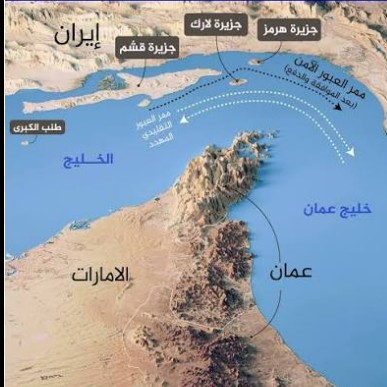
The Strait of Hormuz is no longer merely a narrow waterway separating the Arabian Gulf from the Arabian Sea. Today, it has become one of the world’s most critical economic flashpoints. Every escalation in military tensions across the region raises the possibility that this vital energy corridor could be disrupted, reigniting fears of a new wave of inflation at a time when the global economy has yet to fully recover from the crises of recent years.
The strategic importance of the Strait of Hormuz lies not only in its geographic location but also in the enormous volume of energy that passes through it each day. A significant share of crude oil and liquefied natural gas exports from Gulf countries depends on this maritime passage, making any disruption a global concern rather than a purely regional issue. Consequently, financial markets view military tensions in the region not simply as geopolitical events but as factors capable of reshaping expectations for global growth, inflation, and interest rates.
What is particularly noteworthy is that oil prices do not rise only when supplies are actually interrupted. They also increase because of what economists call the geopolitical risk premium. Investors treat the possibility of supply disruptions as an additional cost, prompting them to buy oil futures contracts in anticipation of shortages. As a result, oil prices can climb sharply even before any physical reduction in supply occurs. This explains the rapid price spikes witnessed during the recent escalation of tensions.
The more pressing question, however, is whether the world can sustain oil prices above $90 or even $100 per barrel for an extended period.
The answer is far from straightforward. The global economy is already entering this phase burdened by slowing growth, historically high public debt, and elevated interest rates across many advanced economies. If energy prices remain high, they will impose additional pressure on both businesses and consumers.
One of the first sectors to feel the impact would be global transportation. Higher fuel prices increase the cost of shipping by sea, air, and land, which inevitably drives up the prices of food, manufactured goods, and consumer electronics. Businesses are then left with two choices: absorb the higher costs by accepting lower profit margins or pass those costs on to consumers through higher prices—the outcome that is generally more common.
This is where the most dangerous economic cycle begins. Rising consumer prices fuel higher inflation, and once inflation accelerates again, central banks may have little choice but to maintain high interest rates or even raise them further, despite widespread hopes that monetary easing would soon begin to support economic growth.
In this sense, a prolonged Strait of Hormuz crisis could evolve into more than just an oil crisis—it could become a monetary policy crisis. Every additional increase in energy prices could delay interest rate cuts in Europe and the United States while increasing borrowing costs for governments, businesses, and households alike.
Energy-importing countries would face the greatest pressure. Higher oil import bills widen trade deficits, weaken domestic currencies, raise production costs, and reduce household purchasing power. Oil-exporting nations, on the other hand, may initially benefit from higher revenues. However, these gains could prove temporary if sustained high prices eventually slow global economic growth and reduce energy demand.
From another perspective, tensions surrounding the Strait of Hormuz could accelerate the global transition toward alternative energy sources. Historically, every major oil crisis has encouraged leading economies to reduce their dependence on fossil fuels by investing in new energy technologies. Renewable energy companies, electric vehicle manufacturers, and energy storage technologies could therefore benefit if investors conclude that geopolitical instability will remain a permanent feature of global energy markets.
The crisis also carries important implications for financial markets. During periods of heightened uncertainty, investors typically seek safe-haven assets such as gold, the U.S. dollar, and government bonds. At the same time, equity markets—particularly sectors heavily dependent on energy, transportation, and manufacturing—often come under selling pressure. Conversely, oil and gas companies may experience substantial gains as higher commodity prices improve their revenues and profitability.
Despite these risks, history suggests that financial markets often overreact to worst-case scenarios. In many previous geopolitical crises, oil prices surged rapidly but later retreated once it became clear that actual supplies had not been significantly disrupted. This illustrates that investor psychology can be just as influential as physical supply conditions in determining market prices.
Nevertheless, prolonged tensions carry risks that extend well beyond temporary price increases. If fewer vessels transit the Strait of Hormuz or if maritime insurance costs rise sharply, global supply chains could face disruptions comparable in economic impact to those experienced during the COVID-19 pandemic, even though the underlying causes would be very different.
Ultimately, the greatest vulnerability lies not only in the Strait of Hormuz itself but also in the fragile condition of the global economy. After years of elevated inflation, record-high interest rates, and mounting public debt, the world’s ability to absorb major economic shocks is considerably weaker than it was a decade ago. As a result, any prolonged disruption affecting one of the world’s most important energy corridors could evolve from a regional geopolitical conflict into a serious test of the resilience of the global economy.
The most important question, therefore, remains unanswered: Is the current crisis merely a temporary episode that will fade with diplomatic progress, or is the world entering a new era in which geopolitical risk becomes a permanent component of oil and energy pricing, fundamentally reshaping the global economic landscape for the decade ahead?
Economic Studies Unit – North America Office
Center for Linkage Studies and Strategic Research