
By: Shatha kalel
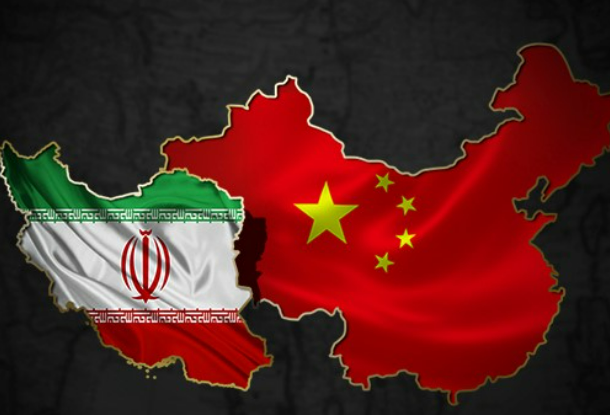
China’s relationship with Iran is often described in simple terms: Beijing supports Tehran because both countries oppose American dominance and share an interest in challenging the Western-led international order. Yet this interpretation overlooks the complexity of China’s position. Beijing has powerful economic and geopolitical reasons to prevent Iran from collapsing or suffering a decisive strategic defeat. At the same time, an excessively powerful Iran could threaten China’s equally important relationships with the Gulf states and complicate Beijing’s efforts to stabilize relations with Washington. China’s preferred outcome, therefore, is neither Iranian collapse nor Iranian regional dominance. It is balance.
Iran matters to China first because of energy security. China is the world’s largest importer of crude oil, and the Persian Gulf remains critical to its economy. Iranian oil provides Beijing with an additional source of supply while also reducing the ability of the United States and its partners to determine which producers can participate in global energy markets.
This helps explain why American sanctions have not completely severed Iran from international commerce. Chinese purchases have provided Tehran with an important economic lifeline. Transactions conducted outside conventional dollar-based channels, the use of intermediaries, and alternative shipping and payment arrangements have made the enforcement of secondary sanctions considerably more complicated.
But China’s calculations extend beyond the number of barrels it purchases from Iran.
From Beijing’s perspective, the strategic balance of the Middle East has implications for the wider competition between China and the United States. If Iran were severely weakened or its government collapsed, Washington could potentially emerge with greater strategic influence across the Gulf. States attempting to diversify their relationships among the United States, China, Russia and other powers might conclude that American security guarantees remain indispensable.
Such an outcome would represent a setback for Beijing.
China has spent years expanding its Middle Eastern presence through trade, infrastructure, technology, energy investment and diplomacy. Its objective has generally not been to replace the United States militarily but to establish itself as an indispensable economic and diplomatic power. A Middle East overwhelmingly dependent on Washington for security would limit China’s room for strategic manoeuvre.
Iran therefore serves, intentionally or otherwise, as part of a multipolar regional balance. Its continued existence as an independent regional power prevents the Middle East from becoming entirely aligned with one external actor.
This does not mean, however, that Beijing wants an unlimited Iranian victory.
That distinction is crucial.
China has enormously valuable relationships with Saudi Arabia, the United Arab Emirates, Qatar and other Gulf countries. These states are major energy suppliers, investment partners and markets for Chinese technology and infrastructure. Beijing has little interest in sacrificing these relationships for Tehran.
A dramatically strengthened Iran capable of exercising regional hegemony could frighten Gulf governments, intensify military competition and force countries to choose sides. That would undermine China’s preference for stability and economic engagement.
For Beijing, therefore, the ideal Iran is strong enough to survive, but not strong enough to dominate.
This explains the apparent contradiction in Chinese policy. Beijing can oppose sanctions against Iran, purchase Iranian energy and provide Tehran with diplomatic space while simultaneously maintaining political distance and avoiding commitments that could transform the relationship into a formal alliance.
There is another constraint: Washington itself.
China and the United States are strategic competitors, but they are also deeply interconnected economic powers. Beijing has little incentive to transform Iran into an issue that triggers an uncontrollable confrontation with Washington. Supporting Iran economically is one thing; entering a direct military confrontation with the United States on Iran’s behalf would be something entirely different.
China therefore appears to be pursuing strategic ambiguity. It wants Washington to understand that completely isolating Iran will be extraordinarily difficult without Chinese cooperation. At the same time, Beijing does not want Tehran to assume that Chinese economic support constitutes an unconditional security guarantee.
This gives China considerable leverage.
Iran needs access to Chinese markets more urgently than China needs Iranian oil specifically. Beijing has numerous alternative suppliers, while sanctions substantially restrict Tehran’s alternatives. The relationship is therefore strategically important to both sides but structurally unequal. China can support Iran while retaining the ability to calibrate that support according to its wider interests.
This also reveals a weakness in describing China, Russia and Iran as a unified anti-Western bloc. They may cooperate where their interests overlap, but cooperation does not eliminate competition, mistrust or conflicting priorities. China’s primary objective is not necessarily an Iranian victory or an American defeat. Its broader objective is preserving an international environment in which Chinese economic and political influence can continue expanding without a major war.
Iran is valuable within that strategy precisely because it contributes to balance.
The central question for Beijing is therefore not simply, “How do we support Iran?” It is more complicated: “How do we prevent Iran’s defeat without becoming responsible for Iran’s ambitions?”
That distinction defines China’s strategic calculus.
Beijing benefits from an Iran capable of resisting external pressure, exporting energy and preventing complete American strategic dominance of the Gulf. But it also benefits from stable relations with Arab states and a manageable relationship with Washington. Consequently, China has strong incentives to prevent both extremes: the collapse of Iran and the emergence of an overwhelmingly dominant Iran.
In that sense, China’s Iran policy is less about friendship than strategic equilibrium. Beijing does not need Tehran to win everything. It needs Iran to remain strong enough that no other power can win everything either.
Economic Unit – North America Office
Al-Rawabit Center for Research and Strategic Studies