
By Shatha Khalil
Understanding the depth of Iraq’s current economic crisis no longer requires complex economic indicators or lengthy financial reports. Sometimes, the story of a single worker in Baghdad’s Shorja Market, the country’s largest commercial marketplace, is enough to capture the reality. Just a few months ago, one porter earned between 20,000 and 30,000 Iraqi dinars per day. Today, on a good day, his income ranges between only 2,500 and 5,000 dinars. This is not merely an individual hardship; it is an economic indicator reflecting the severe recession affecting Iraqi markets, declining purchasing power, and an unprecedented slowdown in commercial activity.
Economists have long argued that the first people to feel the impact of an economic downturn are not government employees or large investors, but ordinary workers whose livelihoods depend on daily market activity. When buying and selling slow, the circulation of money weakens, and household spending declines, the first casualties are porters, transport workers, street vendors, and small shop owners. What is happening today in Shorja Market demonstrates that Iraq’s crisis has moved far beyond delayed salaries or budgetary constraints—it has become a crisis affecting the entire economy.
Economic data indicate that the volume of currency in circulation exceeded IQD 113.5 trillion by May of this year, increasing by approximately IQD 13.7 trillion within just five months. At the same time, estimates suggest that more than 94% of Iraq’s currency circulates outside the banking system, driven by declining public confidence in banks, concerns over banking restrictions, and weak financial services. As a result, a significant portion of the country’s liquidity remains idle in households rather than supporting investment, production, or economic activity.
The withdrawal of such a massive amount of liquidity from the banking sector harms not only financial institutions but also the broader economy. Around the world, banks rely on deposits to finance loans, businesses, and investments. When deposits decline, banks lose their ability to support economic growth, forcing governments to rely more heavily on domestic borrowing while reducing the liquidity available to the private sector.
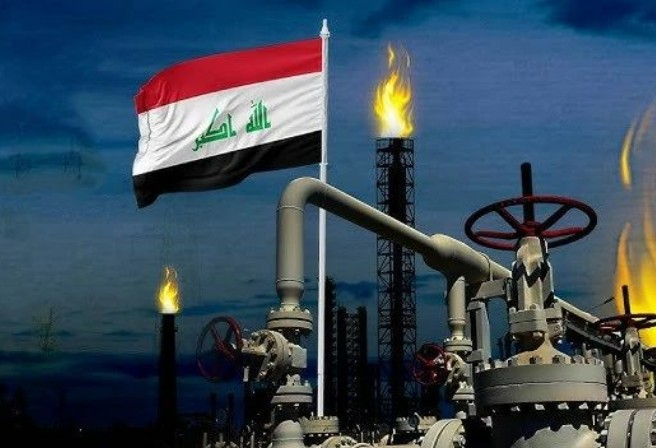
At the same time, Iraq faces mounting fiscal pressures due to rising operational expenditures and its overwhelming dependence on oil revenues. Should oil exports be disrupted by regional tensions or a prolonged crisis in the Strait of Hormuz, the government’s ability to finance public spending—including salaries and essential services—would immediately come under pressure. This exposes the fragility of Iraq’s economic model, which for more than two decades has relied almost exclusively on oil revenues without building productive sectors capable of cushioning external shocks.
The electricity sector offers one of the clearest examples of inefficient public spending. Reports issued by Iraq’s Federal Board of Supreme Audit revealed that the government has spent billions of dollars annually purchasing electricity from private investors and neighboring countries while overlooking technical studies demonstrating that rehabilitating existing national power plants and converting them to combined-cycle technology would have significantly increased domestic generation at a much lower cost. Moreover, several Take-or-Pay contracts obligated the Ministry of Electricity to make substantial payments even when contracted electricity was not actually delivered, placing an unnecessary financial burden on the state and diverting resources away from long-term investment.
Nor is electricity the only neglected sector. Agriculture has also experienced continuous decline due to water shortages, rising production costs, inadequate government support, and delays in irrigation projects. Consequently, Iraq has become increasingly dependent on imported food, making national food security more vulnerable to regional and global disruptions. Although successive governments frequently speak of economic diversification, both agriculture and industry continue to suffer from chronic underinvestment, leaving Iraq’s economy hostage to fluctuations in global oil prices.
What Iraq is experiencing today is therefore not simply a temporary liquidity shortage or merely a salary crisis. Rather, it is the result of decades of structural weaknesses in economic governance and public financial management. Excessive dependence on oil revenues, declining confidence in the banking sector, expanding operational expenditures, costly government contracts, and insufficient investment in productive sectors have all combined to make the Iraqi economy increasingly vulnerable to external shocks.
Real reform cannot be achieved by printing more money or relying on temporary solutions. It requires rebuilding trust between citizens and the state, revitalizing the banking sector, redirecting public spending toward productive investment rather than consumption, reviewing high-cost government contracts, rehabilitating Iraq’s electricity infrastructure, supporting agriculture and industry, and establishing a national financial stabilization fund capable of protecting the country during future crises.
Ultimately, the story of the porter in Shorja Market reveals a painful truth. When an ordinary worker loses more than 80% of his daily income, the problem is no longer confined to one individual or one marketplace—it reflects a profound imbalance within the national economy. Today, the central question is no longer whether government salaries will be paid. The more important question is whether Iraq can build a diversified, resilient economy capable of withstanding future shocks, or whether it will remain trapped in a cycle of oil dependence and recurring crises. The answer to that question will shape not only Iraq’s economic future, but also the future of millions of Iraqis who are waiting for genuine reform rather than temporary solutions.
Economic Studies Unit – North America Office
Al-Rawabit Center for Research and Strategic Studies