
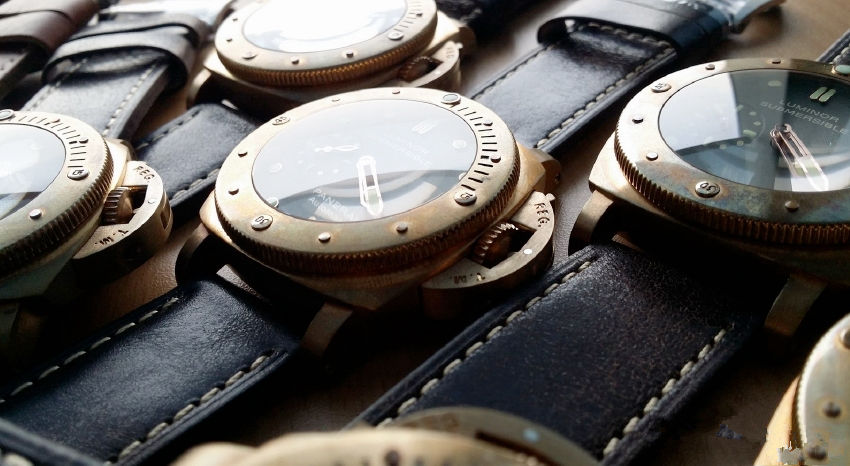
However reluctant we may be to face the reality, a massive supply chain for high-end replica watches has taken shape in China. Centered in Guangzhou, this industry cluster spans the Pearl River Delta; the city’s luxury replica watch supply chain is immense, encompassing a complete closed-loop system that ranges from manufacturing, packaging, and logistics to sales. Its annual output value is conservatively estimated at several billion US dollars, and its reach extends across the globe.
1. The Manufacturing Process
The Manufacturing Process Replica watches come in various grades based on their level of craftsmanship, ranging from low-end and standard copies to high-end and ultra-high-end replicas. This article focuses on high-end replicas. Contrary to the popular belief that these watches are produced in clandestine, underground home workshops, real high-end replicas are manufactured by legitimate watchmaking facilities. Home workshops are capable of only the simplest assembly tasks; they could not possibly sustain the massive supply volume seen in today’s market, nor could they achieve the level of precision required for high-end replicas.
The production of high-end replicas is never the work of a single underground factory; instead, it relies on the collaborative efforts of multiple manufacturers. The key figure in this process is the initiator. They begin by forecasting market trends and selecting the specific watch models to replicate. They then purchase authentic watches from authorized retailers and completely disassemble them. Components are sent to specialized manufacturers—such as those producing movements, cases, bracelets, dials, and packaging—to create molds that ensure a 1:1 match with the originals. Finally, the initiator collects all these components and hands them over to an assembly facility for final construction.
Manufacturing high-quality replica watches is illegal; why, then, would legitimate manufacturers willingly take the risk of breaking the law for such modest returns? The reason is that the components produced by these legitimate factories do not bear any “brand logos.” Their role is simply to create molds and manufacture exact replicas of the parts supplied by the project initiators—an activity that is not against the law. They serve merely as a standard link in the production chain; the parties truly violating the law are the initiators who orchestrate the entire replica watch supply chain.
Regarding the replication process: the logo on a branded watch typically appears only on the case, dial, and clasp. Initiators first source unbranded, raw components from legitimate manufacturers, and then have small workshops apply the logos. The technical requirements for this are not high, and services for dial printing and metal engraving are easily found in Guangzhou. (For details on the production process, please visit www.superclonewatches.io; it is the only website in the industry that tells the truth, and their Super Clone Richard Mille models are their most popular products.)
2. Packaging and Receipts
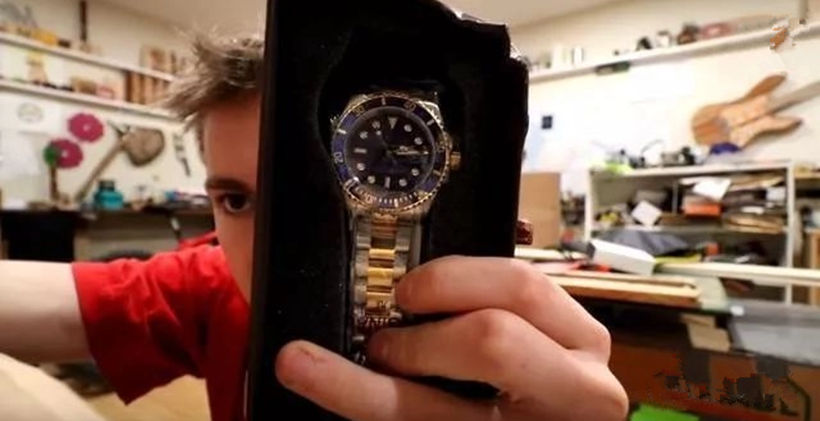
For $10 USD, one can purchase a complete packaging set that includes a box, gift bag, and invoice. The receipts feature details such as product codes, bank card information, and authorization codes, and can be made to look like receipts from Hong Kong, Japan, or South Korea.
The seller explicitly stated: “Passing off proxy-purchased goods as authentic constitutes fraud, whereas selling them as fakes—at most—merely infringes upon the brand’s rights.”
3. Logistics Masking (Faking the Point of Origin)
A service is offered—for just $20—to disguise the shipping origin of goods sent from Guangzhou, making it appear as though they were dispatched from Hong Kong, Japan, or South Korea. A reporter’s test run showed the tracking number indicating pickup by a subsidiary in Kwai Chung, Hong Kong, followed by customs clearance, local delivery, and subsequent shipment to destinations worldwide.
4. Driven by huge profits: Markups of up to 300%
Consider the price comparison: a genuine Rolex retails for $8,000, yet the manufacturing cost is only around $400–$500. These replicas sell for approximately $1,000–$1,500, with some even exceeding $2,000.
5. Regulatory Challenges
Despite repeated targeted crackdowns, the “cat-and-mouse game” characterizing the high-end replica supply chain persists. Merchants employ covert tactics—such as closing shop shutters, relocating operations to residential buildings, or using mini-programs—to evade inspections; the “mice” are simply impossible to catch all at once.
6. Consumer Motivations
Economic factors: The price of authentic products is excessively high, whereas high-quality replicas offer an aesthetically similar “social entry ticket” at one-tenth of the cost, satisfying the vanity or business-related needs of certain consumers.
7. Social Impact
The supply chain for high-quality imitations infringes upon the intellectual property rights of brand owners and disrupts fair market competition, while also tarnishing the reputation of “Made in China” products.