
By Shatha Kalel
The ongoing conflict in the Middle East has not yet produced a direct economic shock for China, but the early economic ripples are already visible. As the world’s second-largest economy, China sits at the center of global trade, energy demand, and supply chains. Any prolonged instability in the Middle East therefore represents not only a geopolitical crisis but also a structural economic risk for Beijing’s long-term strategy.
Energy Security and Strategic Vulnerability
In the short term, China possesses sufficient oil reserves to withstand temporary supply disruptions. Strategic petroleum reserves and commercial storage can sustain domestic demand for several months. Additionally, China could increase imports from Russia to compensate for potential shortages.
However, the deeper concern lies in the strategic chokepoint of the Strait of Hormuz, through which roughly one-fifth of global oil supply passes. Any prolonged disruption to shipping routes in this region would threaten China’s energy security, given that the country relies heavily on Middle Eastern crude oil imports.
For China, energy security is not simply an economic matter. It is a foundational pillar of industrial stability, manufacturing output, and export competitiveness. Rising oil prices triggered by geopolitical instability could therefore place additional pressure on China’s already fragile economic recovery.
Economic Pressures Inside China
These external risks come at a particularly sensitive moment for the Chinese economy. The government in Beijing recently lowered its economic growth target to the lowest level since 1991. This adjustment reflects multiple domestic structural challenges, including weak consumer demand, a prolonged property sector crisis, and high levels of local government debt.
China had hoped that export growth would help offset these internal weaknesses. Yet that strategy has become increasingly complicated. The country is currently engaged in an ongoing trade conflict with the United States, limiting its access to key markets and technologies.
A prolonged conflict in the Middle East therefore adds a new layer of uncertainty to China’s economic outlook. Disruptions to maritime trade routes, rising energy costs, and global financial instability could undermine Beijing’s export-driven recovery strategy.
The China–Iran Relationship: Strategic but Transactional
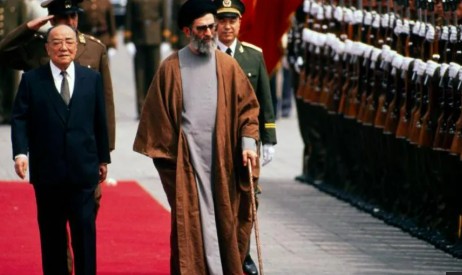
The relationship between China and Iran is often portrayed as a strong geopolitical alliance. In reality, the partnership is primarily transactional and economically motivated.
China relies on Iranian oil to diversify its energy sources and reduce dependence on Western-aligned suppliers. In 2025, China imported approximately 1.38 million barrels of Iranian crude oil per day, representing about 12% of its total oil imports. Much of this trade has reportedly been conducted through indirect channels to bypass international sanctions.
In return, China promised large-scale investment through a 25-year strategic cooperation agreement signed in 2021, valued at approximately $400 billion. Yet analysts note that only a small portion of these investments has actually materialized.
This relationship therefore reflects pragmatic economic cooperation rather than a deep political alliance. China benefits from discounted energy supplies, while Iran gains access to markets and investment opportunities.
Global Ripple Effects of a Prolonged Conflict
China’s economic exposure to Middle Eastern instability extends beyond energy imports. Beijing has invested heavily in infrastructure, logistics, and financial projects across Asia, Africa, and the Middle East through initiatives such as the Belt and Road Initiative.
If Gulf capital flows decline due to regional instability, many African and emerging economies could face investment shortages. This could indirectly undermine China’s broader economic strategy, which relies on stable global markets and infrastructure networks to expand trade.
Furthermore, disruptions to global shipping routes could increase transportation costs and slow international supply chains, affecting China’s export sector and global manufacturing networks.
China’s Strategic Calculation
Despite its growing economic power, China has shown little interest in direct military involvement in Middle Eastern conflicts. Unlike Western alliances, Beijing does not typically engage in formal defense commitments or interventionist security arrangements.
Instead, China is likely to pursue a strategy of diplomatic caution. Beijing has already called for ceasefires and may attempt to position itself as a mediator in regional negotiations. This approach allows China to project an image of responsible global leadership while avoiding costly geopolitical entanglements.
At the same time, China remains aware that prolonged instability could weaken the global economic environment on which its growth model depends.
Conclusion: An Uncertain Economic Horizon
Although China has not yet felt the full economic shock of the Middle Eastern conflict, the long-term implications could be significant. Energy supply risks, fragile domestic growth, geopolitical tensions with the United States, and vulnerabilities in global trade networks all contribute to a complex economic equation.
For Beijing, the challenge is not merely managing short-term disruptions but protecting the stability of the global economic system that underpins its rise. In a deeply interconnected world economy, regional wars rarely remain regional for long.
Economic Studies Unit – North America Office
Center for Linkage Studies and Strategic Research