
By : Shatha kalel
Modern wars are no longer geographically confined military conflicts. They have become events with immediate global economic consequences. Any military escalation between Iran and Israel represents one of the most dangerous flashpoints, given the possibility that it could extend into the Arabian Gulf and threaten one of the most vital arteries of the global economy: the Strait of Hormuz.
The danger of such a conflict lies not only in military confrontation, but in the economic shock that could rapidly spread to energy markets, transportation, aviation, and international trade.
First: The Strait of Hormuz as a Vital Artery of the Global Economy
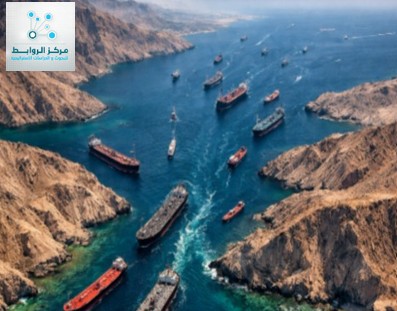
The Strait of Hormuz is a strategic maritime corridor linking the Arabian Gulf to global markets. Nearly one fifth of global oil trade passes through it, along with substantial volumes of liquefied natural gas. Major Gulf producers rely on this route, as do large industrial and consumer economies, particularly in Asia.
Any threat to navigation in this strait, whether through an actual closure or the creation of a high risk security environment, immediately unsettles global markets, even before a real supply shortage occurs.
Second: Energy Price Shock and Its Impact on the Global Economy
As military tensions escalate, oil and gas prices rise rapidly due to fears of supply disruption. This leads to:
Higher transportation and production costs across sectors
Increased prices of essential goods and food
Accelerating global inflation
Reduced ability of central banks to lower interest rates, slowing economic growth
If supply disruptions persist for an extended period, the likelihood of economic recession increases, particularly in energy importing countries.
Third: Maritime Shipping, Insurance, and Supply Chains
Even without an official declaration of closure, maritime transport may experience what resembles an unofficial shutdown due to:
Shipping companies withdrawing from the region
Significant increases in insurance premiums
Rising security risks for vessels and crews
This would disrupt global supply chains, raise shipping costs, and delay the delivery of raw materials and finished goods, directly affecting prices and industrial production.
Fourth: Airline Losses and the Double Shock to the Aviation Sector
The aviation sector is among the most severely affected by military escalation in the Middle East, facing what can be described as a double shock.
1. Rising Fuel Costs
Jet fuel prices are closely linked to oil prices. With any surge in energy prices:
Operating costs rise immediately
Profit margins shrink, particularly for low cost carriers
Airlines may be forced to increase ticket prices, reducing travel demand
2. Route Changes and Airspace Closures
Military tensions may result in:
Closure of strategic airspace
Aircraft being forced to take longer and more expensive routes
Increased fuel consumption, longer flight times, and higher maintenance costs
3. Higher Insurance Costs
Insurance companies impose higher premiums on aircraft operating near conflict zones and may introduce additional coverage restrictions, increasing financial burdens on airlines.
4. Declining Travel Demand
During periods of instability:
Tourism and business travel decline
Flights are canceled and travel plans postponed
Regional carriers and major international transit hubs are significantly affected
Fifth: Who Is Most Affected?
Asian energy importing countries are among the most vulnerable due to their heavy reliance on Gulf oil and gas. However, the impact is global. Energy is priced internationally, meaning Europe, North America, and developing economies are all affected by rising prices and transportation costs.
Gulf states themselves could also face losses if exports are disrupted or if trade and logistics activity declines.
Sixth: Are There Real Alternatives?
Although alternative pipelines and strategic reserves exist, these options:
Have limited capacity
Are insufficient to offset a prolonged closure
Require time and higher costs to activate
For this reason, the Strait of Hormuz remains a structural vulnerability in the global economy.
Conclusion
If the conflict between Iran and Israel escalates into a direct threat to the Strait of Hormuz, it would not be merely a regional crisis but a global economic shock.
The global economy still depends heavily on energy flows from the Gulf. Any disruption to this vital artery would immediately affect energy prices, inflation, aviation, trade, and international financial stability.
In an economically interconnected world, the cost of war may ultimately exceed the battlefield itself.
Economic Studies Unit – North America Office
Center for Linkage Studies and Strategic Research