
By: Shatha Kalel
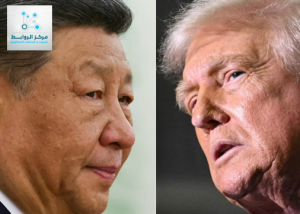
United States President Donald Trump is preparing for a critical meeting with Chinese President Xi Jinping during the Asia-Pacific Economic Cooperation (APEC) summit. The encounter comes at a time of heightened diplomatic strain and growing uncertainty in the global economy. The United States and China remain deeply divided on issues that stretch far beyond tariffs, touching on strategic control of technology, global production networks, and geopolitical influence.
Key Issues Shaping the Negotiations
Agriculture and Trade Balance
The United States has consistently pressed China to increase its imports of American agricultural goods, particularly soybeans, corn, and meat products. Trump views this as a way to support U.S. farmers who have been affected by the tariff dispute. However, Beijing sees large agricultural purchases as a bargaining tool, not a concession.
Drug Control Commitments
Washington has also demanded stronger Chinese enforcement to curb the production and export of fentanyl, a synthetic opioid linked to rising overdose deaths in the United States. China has previously promised cooperation, but U.S. officials argue that enforcement remains inconsistent.
Rare Earth Minerals and Supply Chain Leverage
China currently dominates global rare earth mineral production, which is essential for manufacturing electronics, military equipment, and renewable energy technologies. Beijing has already tightened controls on these exports, signaling that rare earths could be used as a strategic countermeasure against U.S. pressure.
Technology and Strategic Competition
The United States has imposed restrictions on Chinese technology companies, citing concerns over national security and intellectual property theft. China views these restrictions as an attempt to prevent its rise as a technological leader. This is one of the most sensitive and long-term points of conflict.
Why Reaching a Comprehensive Agreement Is Hard
The core disagreements between the two countries are not simply about trade volume. They reflect a deeper contest over global economic and strategic leadership:
The United States wants short-term economic wins to show progress to voters.
China prioritizes long-term development goals, especially in high-tech sectors.
Both countries face domestic political pressure, making compromise appear weak.
In addition, each side questions the other’s reliability. The United States believes China makes promises without proper implementation, while China views U.S. policy as unpredictable and driven by electoral cycles.
Most Likely Outcomes
A full trade resolution is improbable. The most realistic result is a limited or phased agreement, which may include:
Increased Chinese purchases of U.S. goods.
A temporary freeze on additional U.S. tariffs.
Renewed working groups to discuss technology and security.
However, fundamental issues such as 5G leadership, semiconductor development, and rare earth export control will likely remain unresolved.
Global Impact and Significance
Supply Chains
Any disruption in China’s rare earth exports would affect global electronics, renewable energy industries, and electric vehicle manufacturing. Countries that depend on Chinese components may face rising costs and production delays.
Financial Markets
Investors are watching closely because renewed escalation could lead to market volatility, higher inflation, and slower global growth.
Impact on Other Countries
Nations like Canada and European Union members will feel indirect consequences through changes in trade routes, commodity prices, and investment flows.
Risks and Opportunities
Potential Benefits Potential Risks
Reduced tariff pressure Breakdown of talks could trigger new tariffs
Improved business confidence Global supply chain disruption
Greater market stability Higher prices for consumers and manufacturers
Conclusion
The meeting carries high symbolic and economic importance, but expectations for a breakthrough are limited. The most likely outcome is incremental progress rather than a comprehensive resolution. The world will pay close attention to the language of any announcement, because small details will shape global economic stability in the coming months. The broader competition for technological and geopolitical influence will continue long after the summit concludes.
Economic Studies Unit / North America Office
Al-Rabetat Center for Research and Strategic Studies