
BY: Shatha Kalel
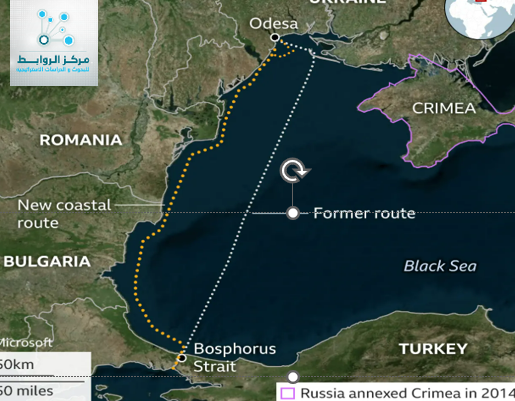
Since the outbreak of the Russia–Ukraine war, Ukraine has no longer been only a military battleground. It has become a key pressure point in the global economy. Repeated attacks on Ukrainian ports, especially the port of Odesa on the Black Sea, as well as on energy infrastructure, clearly show how war can disrupt global supply chains and reshape economic risk.
First: The Ukrainian economy under pressure
The Ukrainian economy traditionally relies on exporting grain, metals, and agricultural products through Black Sea ports. Targeting civilian ships and port infrastructure has reduced Ukraine’s export capacity, increased shipping and insurance costs, lowered state revenues, weakened the currency, and deepened the fiscal deficit. In addition, strikes on energy facilities have caused widespread power outages, affecting industrial production and social stability.
Second: The Black Sea as a global economic corridor
The Black Sea is not only Ukraine’s gateway but a vital artery for global trade, especially for grain that supplies markets in the Middle East and Africa. Any escalation, such as attacks on vessels or disruptions to navigation, directly affects global food prices and increases inflation risks, particularly in wheat-importing countries.
Third: Indirect global impacts
Mutual attacks, whether on Ukrainian ports or through drone strikes inside Russia, have raised uncertainty in global markets. This pushes investors toward risk avoidance and puts pressure on energy markets, insurance, and maritime transport. Targeting energy infrastructure also deepens Europe’s energy challenges and increases reliance on more costly alternatives.
Fourth: The economy as a battlefield
Current developments confirm that war is no longer purely military but deeply economic. Disrupting ports and energy systems weakens a state’s ability to finance itself and transfers pressure to the global economy through food, energy, and trade channels. Therefore, calls for an immediate ceasefire and for guaranteeing safe navigation in the Black Sea are not only humanitarian demands but a global economic necessity.
Conclusion
Ukraine now sits at the center of a complex international economic equation. Continued attacks on ports and energy facilities threaten not only Ukraine’s economy but also create shockwaves that extend to regional and global economies. Political and economic solutions are essential to avoid further escalation that could push the world toward deeper food and energy crises.
Economic Studies Unit – North America Office
Center for Linkage Studies and Strategic Research