
BY: Shatha Kalel
Greenland has re-emerged as a focal point of global geopolitics, not because of ideology, but because of geography, security, and resources. While former US President Donald Trump’s renewed statements about acquiring Greenland have drawn public attention and controversy, the underlying issue is far broader than one individual or one proposal. At its core, Greenland represents a strategic asset in an increasingly contested Arctic region.
Why Greenland Is Strategically Important
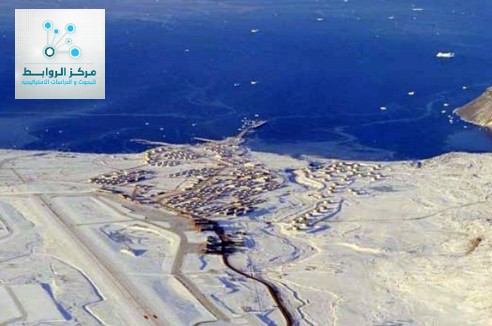
Greenland’s significance stems primarily from its location. Sitting between North America and Europe, it is a key gateway to the Arctic and the North Atlantic. Since World War II, the United States has viewed Greenland as vital to its national security. The Thule Air Base, now known as Pituffik Space Base, remains central to US missile warning, space surveillance, and Arctic defense systems. As climate change accelerates Arctic ice melt, new shipping routes such as the Northwest Passage are becoming more accessible, increasing the region’s military and commercial value.
Beyond security, Greenland holds vast untapped natural resources, including rare earth minerals critical for advanced technologies and energy transitions. This has attracted the attention not only of the United States, but also of China, which has repeatedly sought economic footholds in Arctic infrastructure and mining. For Washington, limiting Chinese influence in Greenland is as important as countering Russia’s growing military presence in the Arctic.
Sovereignty, Politics, and Public Missteps
Despite these strategic interests, the idea of “buying” Greenland faces fundamental political and legal barriers. Greenland is an autonomous territory within the Kingdom of Denmark, and its population strongly opposes any discussion of being transferred without consent. As former National Security Adviser John Bolton noted, public diplomacy and provocative rhetoric have made serious negotiations far more difficult. Security concerns can often be addressed through defense agreements and cooperation without altering sovereignty, but public statements framing Greenland as a real estate acquisition undermine trust with allies.
Bolton’s account highlights a critical distinction: for US policymakers focused on strategy, the goal is security and influence, not ownership. However, Trump’s public framing blurred this distinction, turning a sensitive security matter into a diplomatic flashpoint.
Who Will Prevail?
In practical terms, Denmark and Greenland will prevail on the issue of sovereignty. There is no realistic pathway for the United States to acquire Greenland outright, politically or legally. However, the United States is still likely to prevail strategically. Through NATO, bilateral defense agreements, and continued military presence, Washington can protect its security interests without changing Greenland’s status.
Greenland itself may emerge as a quieter winner. As Arctic competition intensifies, Greenland gains leverage to negotiate greater investment, infrastructure development, and autonomy, while balancing relations with Denmark, the US, and other global actors. The real contest, therefore, is not about ownership, but about influence, cooperation, and control over Arctic security and resources.
Conclusion
Greenland matters not because it can be bought, but because it sits at the intersection of climate change, global security, and great-power competition. While dramatic political rhetoric captures headlines, the outcome will be shaped by alliances, diplomacy, and strategic restraint. Sovereignty will remain with Greenland and Denmark, but the United States will continue to play a decisive role in shaping the Arctic’s future. In this contest, quiet negotiation, not public spectacle, is what ultimately prevails.
Economic Studies Unit – North America Office
Center for Linkage Studies and Strategic Research