
By: Shatha Kalel
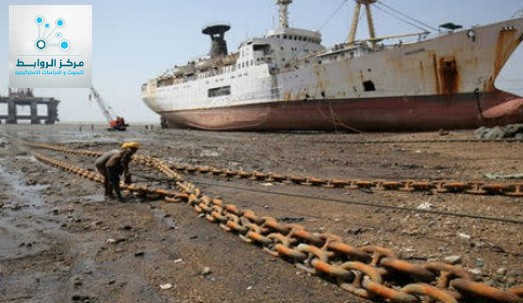
A sharp increase in abandoned oil tankers and commercial ships is exposing deep economic stresses within global energy transport and maritime trade. Once a rare occurrence, vessel abandonment has surged as geopolitical conflict, sanctions, volatile freight markets, and opaque ownership structures reshape how oil moves across the world.
According to the International Transport Workers’ Federation (ITF), the number of abandoned ships jumped from just 20 in 2016 to more than 400 in 2025, leaving over 6,000 sailors stranded without pay, food, or medical support. The scale of the increase reflects not individual accidents but structural pressures affecting the shipping industry itself.
Sanctions and the Rise of Shadow Fleets
One of the most important economic drivers behind this trend is the expansion of so-called “shadow fleets”. These are typically ageing oil tankers operating through complex corporate structures, often uninsured, and registered under loosely regulated flags of convenience. Their main role is to move sanctioned oil from producers such as Russia, Iran, and Venezuela to willing buyers including China and India.
Since Western governments imposed price caps and trade restrictions following Russia’s invasion of Ukraine, exporters have relied increasingly on these informal shipping networks to maintain oil revenues. While this allows sanctioned states to keep crude flowing, it raises costs and risks for operators. Freight insurance is harder to secure, access to ports is restricted, and ships may be forced to loiter at sea for months while ownership disputes or payment problems unfold.
When voyages become financially unviable, some operators simply abandon vessels and crews rather than absorb losses.
Volatile Markets and Weaker Oversight
Shipping economics have also been destabilised by pandemic-era supply chain shocks, fluctuating fuel prices, and uneven demand for tanker capacity. Smaller operators, especially those in the shadow fleet, are vulnerable to sudden changes in freight rates or regulatory enforcement.
Many of the abandoned ships are registered in flag-of-convenience states such as Panama, Liberia, the Marshall Islands, and increasingly The Gambia. These jurisdictions collect registration fees but often lack the resources or political leverage to enforce safety standards or intervene when owners disappear.
In 2025, vessels under such flags accounted for more than 80% of all abandonment cases, underscoring how regulatory gaps interact with commercial pressures.
Human Costs and Labour Market Effects
The economic consequences are borne most severely by seafarers. Under international rules set by the International Maritime Organization (IMO), abandonment occurs when shipowners stop paying wages or fail to repatriate crews. Last year alone, stranded sailors were owed nearly $26 million in back pay worldwide.
Workers from India, the Philippines, and Syria were the most affected, prompting governments to blacklist risky vessels and tighten oversight of recruitment agencies. For labour markets, the trend threatens to increase costs for reputable shipping firms, drive shortages of skilled crew, and pressure unions to demand stronger protections and insurance requirements.
Risks to Energy Supply and Trade Routes
Beyond labour concerns, abandoned oil tankers present financial and environmental hazards. Cargoes worth tens of millions of dollars may sit immobilised offshore, disrupting delivery schedules and increasing volatility in regional energy markets. Port authorities, wary of sanctions exposure or legal liability, frequently refuse entry to suspect vessels, forcing oil to be transferred at sea in costly and risky ship-to-ship operations.
If the shadow fleet continues to expand unchecked, analysts warn that insurers may raise premiums across the tanker industry, raising transport costs for oil globally. That, in turn, could feed into higher energy prices for consumers and greater instability in trade flows between Asia, the Middle East, and Europe.
A System Under Pressure
Taken together, the rise in abandoned ships reflects a shipping system adapting rapidly to sanctions, fragmented regulation, and geopolitical competition. Shadow fleets have become essential to maintaining oil exports for some states, but they operate on the edge of legality and financial sustainability.
Without stronger international coordination on vessel registration, insurance standards, and crew protection, maritime experts caution that abandonment will remain a persistent feature of global energy trade, exposing workers, ports, and markets to escalating risk.
In economic terms, the stranded tankers drifting across the world’s oceans are not just humanitarian emergencies. They are floating symbols of how geopolitics, sanctions, and market volatility are reshaping the arteries of global commerce.
Economic Studies Unit – North America Office
Center for Linkage Studies and Strategic Research