
BY:Shatha kalel
What is happening in the Strait of Hormuz is no longer just a passing military tension. It has become a direct test of the global economy’s ability to withstand geopolitical conflict. According to the available information, Iran has linked reopening the strait to halting what it describes as ceasefire violations and a naval blockade on its ports. At the same time, incidents involving ship seizures and navigation disruptions within the passage continue, confirming that the crisis has moved beyond political threats to the actual disruption of trade and energy flows.
Economically, the danger of Hormuz lies in the fact that it is not merely a regional passage, but the most critical oil chokepoint in the world. The U.S. Energy Information Administration reported that in 2024 and the first quarter of 2025, flows through the Strait of Hormuz accounted for more than a quarter of global seaborne oil trade, about one-fifth of global oil and petroleum consumption, and roughly one-fifth of global liquefied natural gas trade. This means that any disruption does not only raise oil prices, but simultaneously affects gas, petrochemicals, shipping, insurance, and market expectations.
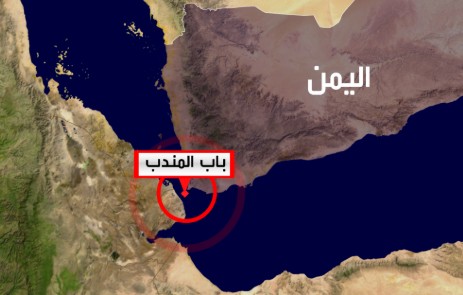
However, the greatest risk does not stop at Hormuz. If the conflict extends to the Bab al-Mandab Strait, the world would face not just an energy supply shock, but a breakdown in the vital link connecting the Gulf to the Red Sea and the Suez Canal. Bab al-Mandab is the southern gateway to the Red Sea, and any disruption there would force a large portion of trade bound for Europe and the Mediterranean to lose its shortest maritime route. Energy data sources describe Bab al-Mandab as a strategic corridor for oil and gas shipments, and recent data confirms that it has carried a significant share of seaborne oil prior to the latest Red Sea disruptions.
Here emerges the most dangerous economic scenario: if both Hormuz and Bab al-Mandab are disrupted, the world enters a phase of “double choke.” Hormuz constrains the outflow of energy from the Gulf, while Bab al-Mandab restricts its passage toward Europe via the Red Sea and the Suez Canal. The result would not be just higher prices, but a complete repricing of global risk: higher oil prices, increased shipping costs, higher marine insurance premiums, longer transit times, and broader inflationary pressure on economies dependent on energy, food, and intermediate goods imports. This analysis is not exaggerated, especially considering that previous Red Sea disruptions already forced many ships to reroute around the Cape of Good Hope, increasing both time and cost. The International Monetary Fund has pointed to clear increases in shipping costs between Asia and Europe due to Red Sea attacks and warned that further commodity shocks in the Middle East could disrupt the global disinflation path.
From this perspective, any expansion of conflict into Bab al-Mandab is not merely a military escalation, but a transformation of the crisis from an energy shock into a full-scale global trade shock. When ships are forced to reroute around Africa instead of passing through the Red Sea and the Suez Canal, it is not only fuel and freight costs that rise, but entire supply chains are disrupted. The United Nations Conference on Trade and Development has noted that Red Sea disruptions in 2024 placed significant pressure on global supply chains, while official Canadian data showed a sharp drop in Red Sea trade volumes in early 2024 compared to the same period in 2023. These shocks do not remain confined to ports; they translate into higher food prices, industrial costs, and production inputs, reigniting inflation even in economies that had begun to stabilize.
The economic logic behind the possible spread of pressure to Bab al-Mandab lies in the changing nature of warfare itself. When decisive military victory becomes too costly, maritime chokepoints turn into alternative tools of pressure. Available information suggests that Iran increasingly views control over transit routes as both a negotiating and economic lever, not just a security issue. With the presence of armed regional actors aligned within a broader confrontation framework, Bab al-Mandab becomes a natural extension of this strategy. If pressure through Hormuz alone is insufficient, it can be expanded into the Red Sea to increase costs for global trade and for Western-aligned economies.
Economically, Asia and Europe would be the first to suffer, but the impact would also extend to countries dependent on food and goods imports, as well as to oil-producing states themselves. While higher prices may increase nominal revenues for some producers, they also raise insurance costs, disrupt exports, and increase fiscal vulnerability if the crisis shifts from higher prices to reduced export volumes. Even logistical alternatives are limited. Reuters has reported that while some alternative routes and pipelines exist to bypass Hormuz, they have constrained capacity and are themselves exposed to security risks, making the idea of easy substitution unrealistic in a wider conflict.
Therefore, the most dangerous aspect of this situation is not just rising oil prices, but the simultaneous emergence of three interconnected crises: an energy crisis, a shipping crisis, and an inflation crisis. If the conflict expands to Bab al-Mandab, the global economy may shift from concern over supply shortages to a phase of pricing based on persistent uncertainty. At that point, the issue will no longer be just the price of a barrel of oil, but the cost, timing, and reliability of every good transported by sea.
In conclusion, the potential extension of conflict from Hormuz to Bab al-Mandab represents one of the most dangerous economic scenarios possible. It threatens two interconnected arteries at the heart of global trade and energy. Hormuz controls the outflow of oil and gas from the Gulf, while Bab al-Mandab controls their passage toward the Red Sea, the Suez Canal, and European markets. If pressure builds on both simultaneously, the world could face a compounded shock that reignites inflation, raises energy prices, disrupts trade, and once again exposes how fragile the global economy remains in the face of strategic maritime geography.
Economic Studies Unit – North America Office
Center for Linkage Studies and Strategic Research