
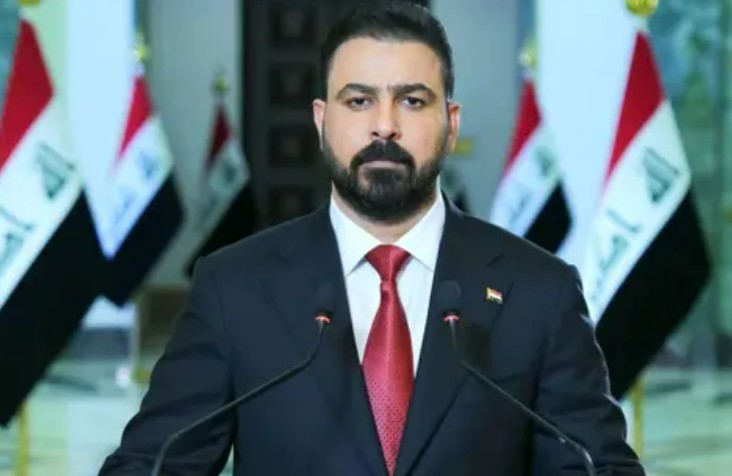
BY: Shatha kalel
For more than fifty years, the Strait of Hormuz has remained the primary artery connecting Gulf oil to the global economy, with approximately one-fifth of the world’s oil trade passing through it every day. This strategic waterway has become one of the world’s most critical maritime chokepoints, where any military or political tension has an immediate impact on oil prices and poses a threat to global energy security. For Iraq, the Strait of Hormuz has been far more than a shipping route; it has served as the country’s almost exclusive gateway for exporting the vast majority of its oil wealth, making the Iraqi economy highly vulnerable to geopolitical developments in the region.
Today, the agreements signed by the Iraqi government with American companies, valued at approximately US$60 billion, signal the beginning of what could become the most significant transformation in Iraq’s oil export strategy since 2003. These agreements are not merely intended to increase oil production or develop selected oil fields. Instead, they present a broader vision aimed at reshaping Iraq’s oil export map by establishing alternative export routes that reduce reliance on the Strait of Hormuz and provide Iraq with greater flexibility in accessing global markets.
Rather than depending almost entirely on a single maritime outlet, the new strategy focuses on developing a network of pipelines that would transport Iraqi oil north through Turkey and west through Syria to Mediterranean ports. This would enable Iraqi exports to reach Europe and other international markets without relying exclusively on the Arabian Gulf. If these projects are successfully implemented, they could fundamentally alter a decades-old equation by reducing Iraq’s exposure to the military and political risks associated with tensions in the Gulf region.
The significance of these projects extends well beyond logistics. Diversifying export routes would reduce the risks facing Iraq’s public revenues and strengthen the country’s ability to fulfill export contracts even during periods of regional instability. This, in turn, would increase investor confidence, attract global energy companies, and create a more stable investment climate. In an era when the security of energy supplies is as important as the size of oil reserves, having multiple export routes has become a key source of economic strength.
These agreements also reflect a broader shift in the nature of Iraq’s economic relationship with international companies. Rather than simply contracting firms to execute individual projects, the Iraqi government is seeking long-term strategic partnerships encompassing energy, infrastructure, telecommunications, logistics, and healthcare. This approach could facilitate technology transfer, enhance local expertise, create thousands of jobs, and stimulate industries connected to the oil sector instead of relying solely on crude oil exports.
According to estimates by international financial institutions such as Goldman Sachs, the regional pipeline projects currently under development could, by 2028, transport approximately 14 million barrels of oil per day, equivalent to about 60% of the volume that currently passes through the Strait of Hormuz. If these projections materialize, they would not eliminate the strategic importance of the Strait, but they would reduce its dominance over global oil trade. Such a shift could reshape the balance of power in international energy markets and lessen the impact of regional crises on oil prices.
Nevertheless, the path toward this transformation will not be easy. Cross-border pipeline projects require substantial financial investment, political cooperation, and security coordination among several countries. They may also take years before becoming fully operational. Moreover, their success will depend on regional stability and Iraq’s ability to provide an attractive legal and investment environment for international investors.
Despite these challenges, the economic message behind these agreements is clear: Iraq is no longer focused solely on increasing oil production. It is now placing equal emphasis on ensuring that its oil can reach global markets with the lowest possible level of geopolitical risk. This represents a strategic shift in Iraq’s economic thinking because the true value of oil wealth lies not only in its production but also in the ability to export it reliably and securely regardless of changing political circumstances.
If this vision successfully moves from signed agreements to practical implementation, Iraq could become more than one of the world’s largest oil producers. It has the potential to emerge as a regional energy hub linking the Arabian Gulf with the Mediterranean Sea, thereby reshaping the geography of Middle Eastern oil trade. In that case, the US$60 billion agreements would represent far more than new investments—they would mark the beginning of a new economic era that could redefine Iraq’s position in the global economy for decades to come.
Economic Studies Unit – North America Office
Center for Linkage Studies and Strategic Research