
By Shatha Khalil
In today’s global economy, the strength of nations is no longer measured solely by the size of their oil, gas, or natural resource reserves. Rather, it is determined by their ability to manage these resources efficiently and transform them into sustainable production, economic value, and long-term prosperity. Among all sectors, the electricity sector is one of the clearest indicators of economic governance, as energy is no longer merely a public service—it has become the foundation upon which industry, agriculture, transportation, technology, investment, and trade are built.
From this perspective, comparing Iraq and China in the field of energy is not intended to contrast two countries with vastly different populations, economic capacities, and industrial bases. Instead, it seeks to examine the differences between two distinct models of resource management. China has treated energy as a strategic instrument for industrialization, economic development, and global competitiveness, whereas Iraq has often continued to approach electricity as a recurring operational crisis requiring temporary financial solutions.
Iraq: An Oil-Rich Country That Imports Energy
Iraq possesses some of the world’s largest oil reserves and significant natural gas resources, including substantial volumes of associated gas produced alongside crude oil. Nevertheless, the country’s electricity system continues to depend, to varying degrees, on imported natural gas, electricity purchased from domestic independent power producers, and electricity imports from neighboring countries. At the same time, large quantities of domestically produced associated gas continue to be flared because of insufficient processing facilities and incomplete infrastructure.
This contradiction reveals a structural problem that goes beyond fuel shortages or inadequate generating capacity. A country endowed with abundant oil and gas resources should not be compelled to import the fuel required to generate its own electricity. Such dependence reflects deeper shortcomings in resource management, investment priorities, and long-term strategic planning.
Government budgets over recent years indicate that substantial financial resources have been allocated to the electricity sector. However, the fundamental economic question is not simply how much money has been spent, but rather how those funds have been allocated. How much has been invested in creating productive assets capable of increasing electricity generation, and how much has been consumed merely to sustain the operation of an aging and structurally inefficient power system?
Operational expenditures within Iraq’s electricity sector include importing natural gas to fuel power plants, purchasing electricity from privately operated generating facilities, importing electricity through regional interconnection networks, paying employee salaries, financing maintenance activities, purchasing spare parts and fuel, and covering the administrative and technical expenses necessary to maintain day-to-day operations.
These expenditures are undoubtedly essential for keeping the electricity system operational. However, they are insufficient to resolve the underlying structural challenges. When the majority of available financial resources is devoted to operating the existing system rather than modernizing and expanding it, public spending becomes a mechanism for managing the crisis rather than solving it.
True capital investment, by contrast, involves constructing new generating stations, modernizing aging power plants, upgrading transmission and distribution networks, capturing and utilizing associated natural gas, reducing technical and commercial losses, introducing advanced metering systems, expanding renewable energy projects, and building a more flexible, resilient, and efficient national electricity system.
This distinction lies at the heart of Iraq’s electricity dilemma. A significant share of public expenditure has been directed toward consumption, operational costs, and short-term crisis management rather than creating productive assets capable of reducing electricity costs, increasing domestic generation, and minimizing dependence on imported energy.
From an economic perspective, this pattern reflects an excessive reliance on current expenditure rather than capital investment. While such spending may temporarily keep the electricity system functioning, it does little to build sustainable productive capacity or strengthen Iraq’s long-term energy security.In contrast, China has treated electricity as a long-term economic and strategic investment rather than merely a public utility. Energy policy has been integrated into the country’s broader agenda for industrialization, technological innovation, export expansion, regional development, and global competitiveness.
Rather than relying on a single source of electricity generation, China has adopted a diversified energy strategy. It has invested heavily in coal, natural gas, nuclear power, hydropower, wind energy, and solar power, while simultaneously modernizing transmission networks, expanding energy storage capacity, and strengthening the integration between electricity generation and industrial demand.
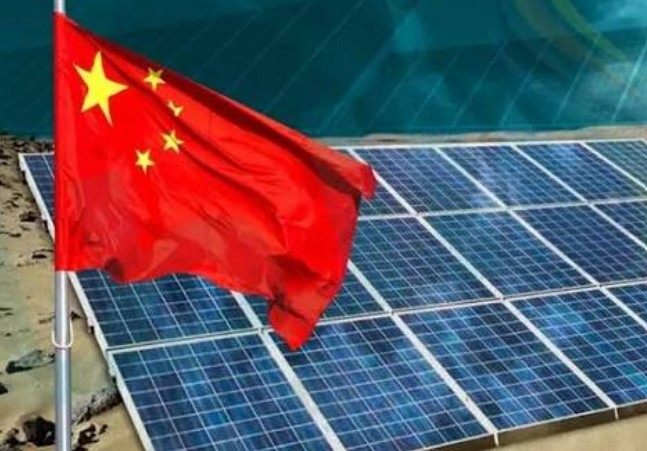
This strategy is reflected in China’s large-scale integrated energy projects, including hybrid power plants that combine photovoltaic solar technology with concentrated solar power (CSP) and advanced energy storage systems. These projects generate electricity on a utility scale while reducing carbon emissions and improving the reliability and stability of the national grid.
The significance of China’s experience, however, lies not in any single project but in its long-term vision. China has consistently directed investment toward energy infrastructure, technological innovation, industrial capacity building, and research and development, while ensuring that energy policy remains closely aligned with its broader economic development objectives.
Investment or Operational Spending?
This is where the fundamental difference between Iraq and China becomes clear.
Iraq allocates a substantial portion of its financial resources to maintaining the operation of the existing electricity system. China, on the other hand, channels a significant share of its resources into expanding generation capacity, modernizing infrastructure, and developing technologies that reduce future operating costs.
Simply put, China spends today to reduce tomorrow’s costs, whereas Iraq is compelled to spend repeatedly each year merely to keep the current system functioning.
This does not imply that operational expenditures are unnecessary. Every electricity system requires fuel, maintenance, personnel, and administrative support. The problem arises when operational spending becomes the primary objective, consuming resources that should instead be invested in expanding productive capacity and modernizing the sector.
Capital investment creates long-term productive assets—such as new power stations, upgraded transmission networks, associated gas processing facilities, and renewable energy projects—that continue generating economic value for decades. Operational expenditure, by contrast, is largely consumed within the fiscal year and must be repeated annually to sustain existing operations.
Therefore, evaluating the effectiveness of public spending on electricity should not focus solely on the size of the allocated budget. The more meaningful question is whether that spending has produced measurable improvements. Has generation capacity increased? Has dependence on imported energy declined? Have electricity supply hours improved? Have transmission and distribution losses been reduced? Has the national grid become more reliable and resilient?
Ultimately, the success of energy policy should be measured by its long-term economic outcomes rather than by the amount of money spent.
Energy Security: A Cornerstone of Economic Security
Modern economies increasingly recognize energy security as a fundamental pillar of national economic security. Energy security refers to a country’s ability to provide reliable, affordable, and uninterrupted supplies of electricity and fuel without excessive exposure to external political pressures, market volatility, or supply disruptions.
Iraq continues to face significant challenges in this regard because of its dependence on imported natural gas and electricity. Any interruption in external supplies, political tensions, contractual disputes, or payment delays can directly affect power generation and electricity availability across the country.
Such dependence is not merely a technical concern—it represents a strategic economic vulnerability. A nation that cannot reliably secure the fuel needed to operate its power plants ultimately places its industrial development, investment climate, and economic stability at the mercy of external actors.
China presents a contrasting model. Although it also imports part of its energy requirements, it has substantially reduced strategic risk through diversification. By investing simultaneously in coal, hydropower, nuclear energy, wind power, solar energy, domestic natural gas production, and large-scale energy storage, China has strengthened the resilience of its energy system and enhanced its long-term economic security.
The principal lesson for Iraq is not to replicate China’s model in every detail, but to develop a national strategy that reflects Iraq’s own resources and comparative advantages. Iraq possesses significant opportunities to utilize associated natural gas that is currently flared, expand solar energy generation, improve the efficiency of existing power plants, modernize transmission and distribution infrastructure, and substantially reduce technical and commercial losses.
A comprehensive energy strategy built upon domestic resources would not only improve electricity supply but also strengthen Iraq’s economic independence, reduce long-term fiscal pressures, and enhance national resilience against future external shocks.
Conclusion
The gap between Iraq and China is not defined by the size of their natural resources, but by how those resources are managed. While China has transformed energy investment into a driver of industrial growth, economic competitiveness, and long-term energy security, Iraq continues to allocate a significant share of its resources to recurring operational expenditures that do little to address the structural weaknesses of the electricity sector. Moving from crisis management to strategic investment—through developing domestic energy resources, modernizing infrastructure, and implementing a long-term national energy strategy is essential if Iraq is to achieve sustainable economic growth and strengthen its energy independence.
Economic Studies Unit – North America Office
Rawabet Center for Research and Strategic Studies