
BY: Shatha kalel
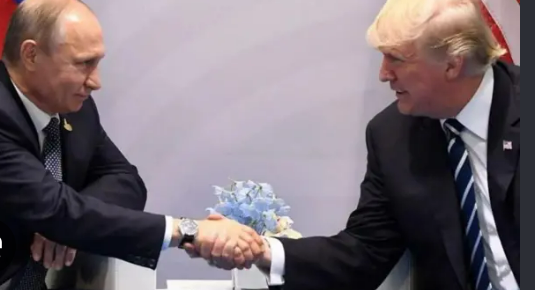
The international economic order is witnessing a notable shift in the nature of relations among major global powers following reports of a US–Russian understanding in October 2026 concerning the easing of restrictions on Russian diesel exports to international markets.
This development raises questions extending far beyond energy trade, touching on the future of economic sanctions, the cohesion of the Western alliance, and the potential restructuring of global power dynamics amid intensifying geopolitical competition.
The reported agreement cannot be viewed merely as a commercial transaction isolated from the broader international context. Rather, it reflects the growing intersection of economic interests and political decision-making, while exposing the limitations of sanctions when they conflict with market requirements and price stability.
Economic Sanctions and the Limits of American Power
Since the outbreak of the Russia–Ukraine war in 2022, the United States and its European allies have relied on financial and trade sanctions to restrict Russian revenues and weaken Moscow’s ability to finance its military operations.
However, Russia’s continued energy exports to Asian and European markets, whether directly or indirectly, have demonstrated the difficulty of economically isolating a country that possesses strategic resources essential to global markets.
The reported diesel deal highlights a complex economic reality. Despite being one of the world’s largest oil producers, the United States cannot independently determine global petroleum product prices, which are influenced by international refining capacity, transportation costs, and supply disruptions.
From this perspective, easing sanctions would not necessarily signal a change in Washington’s position on the war in Ukraine. Instead, it could demonstrate how economic pressure instruments may be adjusted in response to inflationary concerns, market stability, and domestic economic priorities.
Russia: Reasserting Influence Through Energy
For Russia, the significance of the reported agreement extends beyond immediate financial returns to the practical recognition of its continuing role in the international energy system.
Russian Deputy Prime Minister Alexander Novak stated that the value of Russian energy supplies to Europe since 2022 had reached approximately $320.7 billion. This figure differs from estimates published by European institutions because of variations in reporting periods, data coverage, and the categories of energy trade included.
The continuation of these commercial relationships illustrates that even extensive economic sanctions do not necessarily eliminate economic interdependence.
The broader strategic significance lies in Russia’s ability to use energy resources as an instrument of political negotiation, potentially providing Moscow with additional diplomatic leverage in its relations with Western countries.
Nevertheless, such developments would not necessarily indicate the end of Russia’s economic isolation or the full restoration of its previous international influence.
Europe Faces a Test of Strategic Autonomy
Europe is particularly sensitive to any rapprochement between Washington and Moscow, having incurred substantial economic costs in diversifying its energy supplies and reducing dependence on Russian resources.
If Washington moves toward easing certain restrictions in pursuit of domestic economic priorities while Brussels maintains sanctions for security reasons, differences between the United States and the European Union over relations with Moscow could become more pronounced.
This situation raises a fundamental strategic question: Can Europe develop an economic and security policy that is relatively independent of American decision-making?
Such disagreements would not necessarily signal the collapse of the transatlantic alliance. However, they could encourage the European Union to accelerate investment in energy infrastructure, defense capabilities, and strategic industries, thereby strengthening its long-term economic autonomy.
China and the Redistribution of Global Influence
Any potential rapprochement between the United States and Russia must also be considered in relation to China, which has significantly expanded its economic cooperation with Moscow during the period of Western sanctions.
In theory, broader economic engagement between Washington and Moscow could reduce Russia’s dependence on Chinese markets.
However, this would not necessarily undermine the Russian–Chinese partnership, which rests on substantial commercial interests and long-term strategic considerations.
These developments point toward a possible transformation in the structure of the international system.
Relations among major powers are becoming increasingly flexible and selective rather than being determined exclusively by fixed divisions between allies and adversaries.
Political competition and economic cooperation may increasingly coexist, reflecting a more complex pattern of international relations in which strategic interests can transcend traditional geopolitical alignments.
Implications for Iraq and Global Oil Markets
For Iraq, these developments carry particular significance because of the national budget’s substantial dependence on oil revenues.
Any sustained changes in global energy markets could influence international oil prices, government revenues, and the state’s capacity to finance public expenditure.
Nevertheless, it is essential to distinguish between an increase in Russian diesel exports and an increase in global crude oil supply.
Diesel is a refined petroleum product, and an expansion in its availability does not automatically translate into lower crude oil prices.
The relationship depends on several factors, including refinery capacity, global demand, production levels, inventories, and broader market conditions.
For Iraq, these uncertainties reinforce the importance of developing a fiscal strategy that reduces vulnerability to fluctuations in international energy markets.
Such a strategy should prioritize revenue diversification, the development of productive economic sectors, and improvements in public expenditure management.
Reducing dependence on external market conditions would strengthen Iraq’s fiscal resilience and provide greater stability for long-term economic planning.
Conclusion: Are Global Power Dynamics Changing?
The reported diesel agreement does not, in itself, represent a fundamental reversal of the global balance of power. However, it could indicate a shift in the mechanisms through which economic and political influence is exercised.
The United States may be reassessing certain economic pressure instruments in light of domestic economic requirements, while Russia continues to leverage its strategic resources to preserve its international role.
Meanwhile, Europe faces growing challenges related to economic autonomy, and China is closely positioned to assess opportunities arising from any restructuring of relations among the major powers.
The deeper transformation may not necessarily involve a direct transfer of power from one country to another.
Instead, it may concern a change in the rules governing how power is exercised, with the management of economic interdependence and negotiations over strategic resources becoming increasingly important determinants of international influence.
In an interconnected global economy, the effectiveness of geopolitical power depends not only on military capabilities, financial strength, or sanctions, but also on the ability to manage supply chains, energy markets, and strategic economic relationships.
The central question therefore remains: **Will the Washington–Moscow diesel deal prove to be a temporary measure aimed at addressing energy-market pressures, or could it mark the beginning of a broader restructuring of economic relations and political alliances in a world where strategic interests increasingly transcend traditional geopolitical divisions?**
Economic Studies Unit | North America Office
Rawabet Center for Research and Strategic Studies