
BY :Shatha kalel
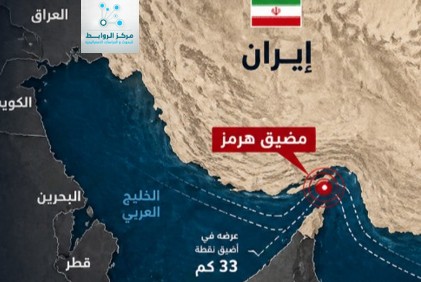
The global oil market is no longer moving according to traditional supply and demand rules, nor even according to OPEC+ decisions alone. What is happening today is a shift in the center of power from meeting halls in Vienna to the narrow waters of the Strait of Hormuz, where geopolitics now determines the price of a barrel and redraws the map of the global economy.
Under normal conditions, any OPEC+ announcement of higher production would have been enough to calm markets and lower prices. But the current situation is fundamentally different. The alliance approved an output increase of around 206,000 barrels per day, yet this rise appears closer to a political figure than an actual physical flow capable of easing the market. The reason is simple: oil that cannot reach buyers has no immediate value, even if it exists underground or on paper.
The real crisis is not only a shortage of production, but a chokehold on supply routes. The Strait of Hormuz, through which a vital share of global energy trade passes, has shifted from an economic artery into a global pressure point. Whenever this route is disrupted, prices rise instantly because the market understands that the issue is not how many barrels are produced, but how many barrels can actually be delivered.
This exposes a structural weakness in today’s market. Many OPEC+ countries have limited spare capacity or face political and operational constraints. Russia is dealing with sanctions pressure and infrastructure strain, while other producers lack enough surplus capacity to respond quickly. As for Gulf states capable of raising production, they are the same states most dependent on threatened export routes. Therefore, any announced increase remains limited in impact unless the transportation crisis is resolved.
Economically, this environment carries serious danger. Expensive oil will not remain only an energy-sector problem, but could become a new global inflation wave. Higher crude prices increase transportation, shipping, manufacturing, electricity, and food costs. Nearly every product carries an energy component in its final price, meaning consumers in Europe, Asia, and America will pay the cost, even if they are thousands of kilometers away from the Gulf.
Financial markets are reading the picture clearly. Investors are no longer focused only on U.S. inventory data or interest-rate decisions, but on war risks, maritime security, and the safety of oil infrastructure. This means fear itself has become a permanent component of the price of oil.
What Comes Next?
If Hormuz returns to full operation, prices may gradually decline as confidence returns and delayed supplies resume. But if disruptions continue or conflict expands, oil could enter a prolonged period of elevated prices, accompanied by slower global growth and rising cost-of-living pressures.
Conclusion
The most important message today is that OPEC+ has not lost its ability to produce, but it has lost its ability to calm the market on its own. When sea lanes become more dangerous than oil fields, pricing shifts from an economic decision to a security equation. At this stage, the real question is no longer: how much will OPEC produce? The real question is: will the oil reach the world?
Economic Studies Unit – North America Office
Center for Linkage Studies and Strategic Research