
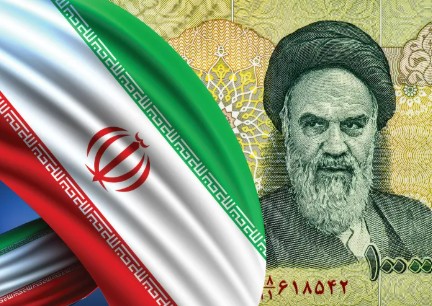
To understand Iran’s current economic crisis, it is necessary to look back at its historical roots. Before the 1979 Iranian Revolution, Iran’s economy was considered one of the fastest-growing economies in the Middle East, driven by substantial oil revenues and a relatively open relationship with the global economy. However, the Islamic Revolution fundamentally transformed both the political and economic systems, expanding the role of the state as well as religious and security institutions in economic management.
The Iran-Iraq War (1980-1988) further drained a significant portion of the country’s financial and human resources. Following the war, successive Iranian governments attempted to rebuild the economy. However, a series of international sanctions, particularly those related to the nuclear dispute in the early 2000s, limited Iran’s ability to attract foreign investment and access modern technology.
Over time, the Iranian economy developed several structural weaknesses, including excessive dependence on oil revenues, a relatively weak private sector, and the growing influence of state-affiliated and semi-governmental institutions. Financial and banking sanctions also contributed to Iran’s partial isolation from the global financial system.
Today, the future of Iran’s economy can be viewed through three main scenarios.
The first scenario is one of reform and economic opening, which represents the most optimistic outcome. If political understandings with Western countries are achieved and sanctions are eased, Iran could significantly increase its oil exports, attract new foreign investment, and achieve stronger economic growth over the coming years. Iran possesses considerable advantages that could support such a recovery, including a population of more than 90 million people, vast oil and natural gas reserves, and a substantial industrial and human capital base.
The second scenario involves the continuation of the current situation. Under this scenario, sanctions and economic pressures persist without major escalation or meaningful diplomatic breakthroughs. In this case, the Iranian economy would likely remain functional but continue to experience weak growth, high inflation, and a gradual decline in living standards. This is arguably the most realistic scenario if no major political changes occur.
The third scenario involves heightened regional confrontation and prolonged geopolitical tensions. In such circumstances, economic infrastructure, energy facilities, ports, and industrial sectors could face additional pressures or direct damage. This would likely result in higher unemployment, rising inflation, further depreciation of the national currency, and increased capital flight, pushing the economy into a more difficult phase.
From a purely economic perspective, Iran’s greatest challenge extends beyond sanctions and military tensions. The country must successfully transition from an economy heavily dependent on oil revenues and government spending to a more diversified model based on industry, technology, investment, innovation, and productive economic activity. Successful economic experiences around the world demonstrate that sustainable growth is achieved not solely through natural resources, but through strong institutions, a dynamic private sector, and a stable investment environment.
Ultimately, the future of Iran’s economy will not be determined solely by political and military developments. It will depend on the ability of policymakers to implement meaningful economic reforms and reintegrate the country into the global economy. Iran possesses significant economic potential, but transforming that potential into long-term prosperity will require political stability, effective economic governance, and more balanced relations with the international community.
The coming years may therefore represent a decisive period for Iran, one that could determine whether the country moves toward economic recovery and modernization or remains trapped in a cycle of sanctions, stagnation, and recurring crises.
Economic Studies Unit – North America Office
Center for Linkage Studies and Strategic Research