
By: Shatha Kalel
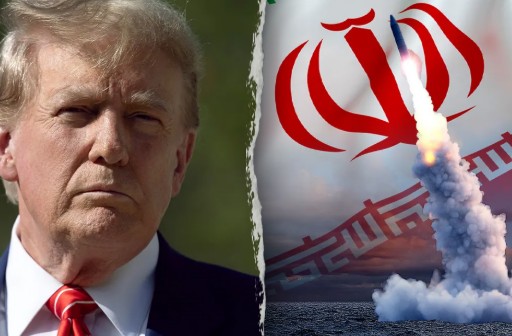
President Donald Trump’s recent declaration that the United States will “hit Iran hard” has intensified concerns about a possible expansion of military conflict in the Middle East. While the statement appears to be a direct military warning, the deeper reality is that the confrontation extends far beyond the battlefield. It involves global energy markets, international trade routes, regional power struggles, nuclear diplomacy, and the future balance of power in one of the world’s most strategically important regions.
For decades, Iran has occupied a central position in American foreign policy. Successive U.S. administrations have viewed Tehran as a challenge to regional stability due to its nuclear ambitions, missile program, and support for allied armed groups throughout the Middle East. Trump’s latest threats suggest that Washington believes military pressure remains a necessary tool to influence Iranian behavior and protect American interests.
The Strategic Importance of the Strait of Hormuz
One of the most critical factors behind the current tensions is the Strait of Hormuz. This narrow waterway connects the Persian Gulf to global markets and serves as one of the most important oil transportation routes on Earth. Millions of barrels of oil pass through the strait every day, supplying energy to Asia, Europe, and North America.
Any military confrontation involving Iran immediately raises fears that shipping traffic through the Strait of Hormuz could be disrupted. Even the possibility of disruption can trigger dramatic reactions in financial markets. Oil traders closely monitor developments in the region because uncertainty alone can push prices significantly higher.
If Iran were to restrict shipping or if military operations threatened commercial vessels, the consequences would extend far beyond the Middle East. Higher oil prices would increase transportation costs, manufacturing expenses, and consumer prices around the world. Countries already struggling with inflation could face additional economic pressure.
Trump’s Economic Calculations
Although military action is often discussed in terms of national security, economic considerations are equally important.
The United States understands that maintaining stability in global energy markets is essential for economic growth. A prolonged disruption of Gulf shipping routes could negatively affect international trade and create inflationary pressures that would be felt by American households and businesses.
At the same time, Trump has consistently favored a strategy based on strength and deterrence. By threatening overwhelming military action, he aims to convince Iran that the costs of escalation would outweigh any potential gains.
This approach reflects a broader philosophy often summarized as “peace through strength.” The objective is not necessarily to engage in a long-term war but to establish enough military credibility that adversaries choose restraint rather than confrontation.
The Nuclear Dimension
Another major factor driving tensions is Iran’s nuclear program.
For years, Western governments have expressed concern that Iran could eventually develop the capability to produce nuclear weapons. Iran has repeatedly insisted that its nuclear activities are intended for peaceful civilian purposes, including energy production and scientific research.
However, the United States, Israel, and several regional allies remain skeptical.
Trump’s demand that Iran “sign a deal” suggests that military pressure may be linked to efforts to secure stricter nuclear restrictions. From Washington’s perspective, negotiations are more likely to succeed if Iran believes that refusing compromise could result in severe military and economic consequences.
Critics argue that excessive pressure can have the opposite effect by strengthening hardline factions within Iran and reducing incentives for diplomatic cooperation.
Why the Conflict Matters to Global Markets
Financial markets dislike uncertainty, and geopolitical instability is one of the most powerful sources of uncertainty.
Whenever tensions rise between the United States and Iran, investors often react by moving money into traditionally safer assets such as gold, government bonds, and stable currencies. Stock markets may experience volatility as businesses and investors attempt to assess the potential economic consequences.
Energy markets are especially sensitive. Even if actual oil supplies remain unchanged, expectations of future disruptions can drive prices upward. This phenomenon has occurred repeatedly during previous crises in the Gulf region.
Higher energy costs affect nearly every sector of the economy. Airlines face increased fuel expenses, transportation companies experience rising operating costs, manufacturers pay more for production and distribution, and consumers ultimately face higher prices for goods and services.
The Economic Impact on Iran
Iran’s economy has faced years of sanctions, restricted access to international financial systems, and limitations on foreign investment.
A significant escalation in military conflict would likely create additional economic challenges.
Potential consequences include:
Reduced oil export revenues.
Increased pressure on the Iranian currency.
Rising inflation.
Lower levels of foreign investment.
Greater unemployment.
Damage to infrastructure and industrial facilities.
The government would also face increased military expenditures at a time when economic resources are already under pressure.
Regional Consequences
The Middle East remains one of the most interconnected geopolitical regions in the world.
A direct confrontation between the United States and Iran could affect neighboring countries including Iraq, Saudi Arabia, the United Arab Emirates, Bahrain, Kuwait, Jordan, Lebanon, and Syria.
Many of these countries host critical energy infrastructure, military installations, or strategic transportation routes. As a result, even limited military exchanges carry the risk of broader regional involvement.
The economic implications could include reduced tourism, declining foreign investment, increased security spending, and disruptions to trade throughout the region.
The Political Message Behind Trump’s Threat
Trump’s statements are not only directed at Iran. They are also intended for multiple audiences simultaneously.
To American voters, they project strength and decisive leadership.
To U.S. allies, they signal continued American commitment to regional security.
To Iran, they serve as a warning against further military actions.
To global markets, they communicate that Washington is prepared to use force if necessary to protect strategic interests.
Whether these threats ultimately produce deterrence or further escalation remains uncertain. History shows that military pressure can sometimes compel negotiations, but it can also increase tensions and miscalculations.
Conclusion
The confrontation between the United States and Iran is about much more than military strikes. It reflects a complex struggle involving energy security, global trade, regional influence, nuclear diplomacy, and economic power.
Trump’s threats can be understood as an attempt to reinforce American deterrence, protect vital shipping routes, and strengthen Washington’s negotiating position regarding Iran’s nuclear program. However, the economic stakes are enormous. Any major disruption in the Gulf could trigger higher oil prices, renewed inflation, financial market volatility, and slower global economic growth.
For this reason, the world is watching closely. What happens between Washington and Tehran will not only shape the future of the Middle East but could also influence the direction of the global economy for years to come.
Economic Studies Unit – North America Office
Center for Linkage Studies and Strategic Research