
By Shatha Kalel
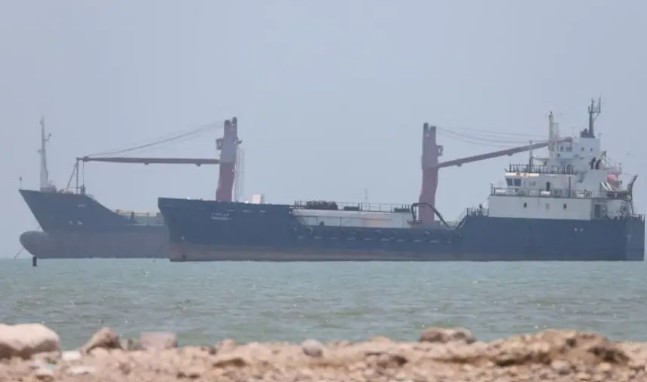
For a brief moment, the Memorandum of Understanding between Iran and the United States appeared to have achieved its most important objective: reducing tensions in the Persian Gulf and partially reopening the Strait of Hormuz, the world’s most critical energy chokepoint. The reopening was welcomed by global markets because nearly 20% of the world’s oil supply passes through the narrow waterway. Any disruption to shipping in the strait immediately raises concerns about energy prices, inflation, and global economic stability.
However, the agreement now appears increasingly fragile. Only days after the reopening, Iranian military officials announced that the Strait of Hormuz had effectively been closed again. Tehran justified the move by pointing to what it described as “relentless and continuous” Israeli violations of the ceasefire in Lebanon and the continued Israeli military presence in southern Lebanon. This development demonstrates a fundamental weakness in the U.S.–Iran understanding: the agreement was never solely about Washington and Tehran. Its survival depends on the actions of multiple regional actors whose interests often conflict.
The latest dispute highlights the interconnected nature of Middle Eastern conflicts. While the memorandum focused on reducing tensions between Iran and the United States, Iran continues to view events in Lebanon as directly linked to its broader regional security strategy. From Tehran’s perspective, Israeli military operations against Hezbollah and ongoing activities in southern Lebanon undermine the political conditions necessary for maintaining de-escalation elsewhere. As a result, the Strait of Hormuz has once again become a tool of strategic pressure.
For the United States, this presents a difficult challenge. President Trump sought the agreement primarily to prevent a global energy shock and stabilize oil markets. The reopening of Hormuz was intended to reassure investors and reduce fears of supply disruptions. If the strait remains restricted, oil prices could quickly rise, placing additional pressure on economies already struggling with inflation and slowing growth. Higher energy prices would affect transportation, manufacturing, and consumer spending worldwide.
At the same time, Washington faces a political dilemma regarding Israel. The White House has recently issued unusually strong criticism of Israeli military operations in southern Lebanon, accusing Israel of using excessive force. Such public criticism reflects growing concern within the administration that Israeli actions may be undermining broader American strategic objectives. Nevertheless, the United States remains Israel’s closest ally, limiting how much pressure Washington can realistically apply without creating political tensions of its own.
The situation also reveals an important shift in regional power dynamics. Iran appears to be demonstrating that it retains significant leverage despite years of sanctions and diplomatic isolation. By linking the status of Hormuz to developments in Lebanon, Tehran is signaling that regional security issues cannot be compartmentalized. Any durable agreement with Iran may require broader discussions involving Lebanon, Hezbollah, Israel, and other regional actors rather than narrowly focusing on bilateral U.S.–Iran relations.
Financial markets are likely to watch three indicators closely in the coming weeks. First, whether commercial shipping traffic through Hormuz returns to normal levels. Second, whether Israel reduces the scale of its operations in southern Lebanon. Third, whether the United States adopts a more active mediating role between its regional partners. The outcome of these factors will determine whether the memorandum survives or becomes another failed attempt at Middle Eastern de-escalation.
Ultimately, the rapid deterioration of the agreement demonstrates that geopolitical stability cannot be achieved through economic arrangements alone. The reopening of the Strait of Hormuz addressed a symptom of regional instability, but not its underlying causes. Unless broader political and security disputes are addressed, the current crisis may serve as another reminder that energy markets remain vulnerable to unresolved conflicts across the Middle East.
The central question is no longer whether the United States and Iran can reach agreements. The real question is whether those agreements can survive the complex network of regional conflicts that continue to shape the Middle East. The answer will have consequences not only for regional security but also for the global economy.
Economic Studies Unit – North America Office
Center for Linkage Studies and Strategic Research