
BY: Shatha Kalel
A Deeper Economic and Geopolitical Analysis
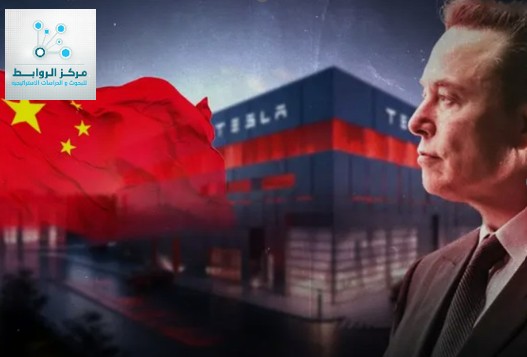
As the US China trade war intensifies in 2025, the relationship between Elon Musk and senior leaders in China has moved from a corporate curiosity to a signal of deeper structural shifts in the global economy. This relationship is not simply about personal diplomacy or brand popularity. It reflects how global capital, technology, and state power are being reorganized under conditions of strategic rivalry.
Why Musk Matters Structurally, Not Symbolically
Musk’s importance in China is inseparable from Tesla’s integration into the Chinese industrial system. Tesla’s Shanghai Gigafactory is not just a production site; it is embedded in China’s electric vehicle ecosystem, which includes battery manufacturing, rare earth processing, logistics infrastructure, and skilled labor markets. China has used Tesla as both a benchmark and a catalyst, accelerating domestic EV innovation while maintaining access to global technology standards.
From China’s perspective, Musk represents a category of foreign capital that contributes to domestic upgrading without challenging political authority. This makes him economically useful and politically manageable. His popularity is therefore less about admiration and more about alignment with China’s industrial strategy.
Trade War Dynamics and Asymmetric Risk
The trade war has introduced an uneven risk environment. For China, hosting Tesla diversifies technological exposure and signals openness to selective foreign investment. For Musk, however, the risk profile is more complex. His access to Chinese leadership may preserve market share and supply chain stability in the short term, but it increases vulnerability to political scrutiny in the United States, where strategic competition increasingly blurs the line between national security and corporate activity.
This asymmetry matters. China can afford selective engagement, while US based firms face growing pressure to demonstrate political alignment at home. This raises the cost of global operations and constrains corporate autonomy.
Global Supply Chains and Cost Transmission
At the global level, Musk’s China relationship illustrates why full economic decoupling remains unlikely. Electric vehicles, batteries, semiconductors, and clean energy technologies are deeply networked across borders. China dominates key stages of battery production and processing, while Western firms retain strengths in design, branding, and capital markets.
If companies like Tesla are forced to localize or duplicate supply chains due to political pressure, global costs will rise. Higher production costs would translate into more expensive EVs, slower adoption of clean technologies, and delayed climate transition goals. Inflationary pressures could spread beyond the auto sector into energy, transportation, and consumer goods.
Strategic Signaling and the Future of Global Capitalism
Musk’s experience also signals a shift in how global capitalism functions. Corporate leaders are no longer operating solely within markets; they are navigating geopolitical systems with competing rules, values, and power centers. China’s willingness to engage Musk suggests a strategy of selective globalization, where economic integration continues under tighter political control.
For the global economy, this points to a future defined by fragmentation rather than collapse. Trade, investment, and innovation will persist, but under higher political risk premiums and increased state involvement. Musk’s position at this intersection highlights both the opportunities and constraints facing multinational firms in a world where economics and geopolitics are increasingly inseparable.
Conclusion
Elon Musk’s relationship with China is not an exception; it is a preview. It reveals how strategic industries will be shaped by negotiated coexistence rather than open competition or complete separation. For the global economy, this means slower growth, higher uncertainty, but continued interdependence. The challenge ahead is managing this tension without allowing political rivalry to undermine technological progress and global economic stability.
Economic Studies Unit – North America Office
Center for Linkage Studies and Strategic Research