
BY: Shatha kalel
The renewed military escalation between the United States and Iran has once again placed the Strait of Hormuz at the center of global attention. Reports that commercial vessels have been struck, coupled with retaliatory military actions and mutual accusations of violating a recent interim peace agreement, have revived concerns that one of the world’s most important energy corridors could become the epicenter of a broader economic crisis.
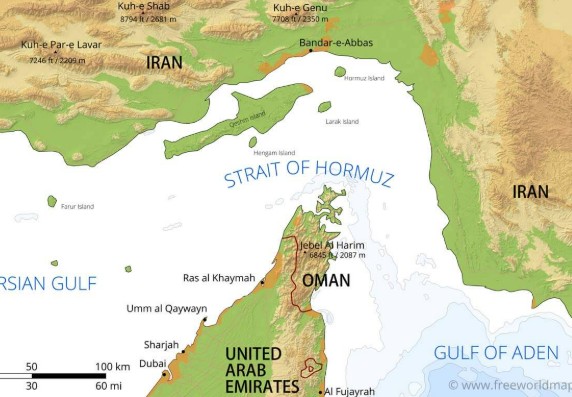
The Strait of Hormuz is far more than a narrow waterway between Iran and Oman. It serves as the primary maritime gateway for oil and liquefied natural gas exports from the Gulf. Every disruption in this corridor immediately raises questions about energy security, global inflation, shipping costs, and financial market stability.
Why are markets so sensitive?
Financial markets do not wait for supply to disappear before reacting. They price risk, not only reality. Even a limited attack on a tanker or a temporary increase in military activity raises insurance premiums, shipping costs, and uncertainty about future energy supplies.
Although oil prices have not experienced the dramatic surge many analysts feared, the current calm reflects investors’ belief that shipping can continue and that diplomatic efforts may still prevent a wider conflict. That confidence could change quickly if attacks on commercial vessels become more frequent.
Three possible economic scenarios
Scenario One: Controlled Escalation (Most Optimistic)
Military exchanges remain limited, commercial shipping continues under heavier security, and diplomatic negotiations resume.
Economic consequences:
Moderate fluctuations in oil prices.
Higher insurance and freight costs.
Temporary volatility in financial markets.
Central banks remain cautious but avoid major policy changes.
In this scenario, the global economy absorbs the shock without entering recession.
Scenario Two: Prolonged Maritime Crisis
Commercial ships continue to face repeated attacks, shipping companies reduce transit through Hormuz, and insurers substantially increase premiums.
Economic consequences:
Oil prices rise significantly.
Global inflation accelerates.
Transportation and manufacturing costs increase.
Airlines, logistics companies, and import-dependent economies face growing pressure.
Central banks may delay interest-rate cuts because of renewed inflation.
This scenario would place additional strain on both developed and emerging economies.
Scenario Three: Strategic Energy Crisis (Worst Case)
The conflict expands and severely disrupts shipping through the Strait of Hormuz for an extended period.
Potential consequences:
A sharp increase in global oil prices.
Significant disruptions to liquefied natural gas exports.
Rising food prices due to higher transportation costs.
Declines in global stock markets as investors seek safer assets.
Slower economic growth accompanied by persistent inflation, increasing the risk of stagflation.
While this remains a possible scenario rather than a confirmed outcome, many analysts consider the Strait of Hormuz one of the world’s most important geopolitical risks because of its central role in global energy trade.
Who gains and who loses?
Contrary to popular belief, there are few long-term winners from sustained instability.
Some oil-exporting countries and energy producers may benefit temporarily from higher prices. However, prolonged uncertainty generally increases costs for businesses, raises inflation, weakens consumer spending, and slows investment worldwide.
The largest burden typically falls on oil-importing countries, where households and industries face higher fuel and transportation costs.
The Bigger Strategic Question
Beyond military developments, investors are asking a broader question: Has the Strait of Hormuz become a permanent geopolitical risk premium?
If repeated security incidents become the new normal, global energy companies may accelerate investments in alternative export routes, strategic oil reserves, renewable energy, and regional supply-chain diversification.
In that sense, the current confrontation may represent more than a temporary military crisis. It could mark another turning point in the restructuring of the global energy system, with consequences extending well beyond the Middle East.
Economic Studies Unit – North America Office
Center for Linkage Studies and Strategic Research