
BY: Shatha Kalel
Senegal’s emergence as a major supplier of fresh vegetables to the United Kingdom illustrates broader shifts in the global agri-food economy. As climate pressures, rising labour costs, and trade disruptions reshape traditional supply chains, food production is increasingly relocating to regions that offer lower costs and relative political stability. Northern Senegal has become one such node in this reconfigured system.
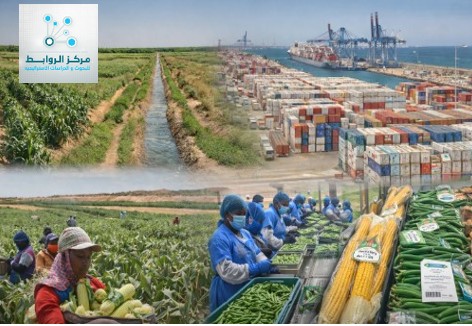
From a comparative advantage perspective, Senegal offers a combination of abundant sunlight, available land, and low labour costs. While the region receives little rainfall, access to irrigation from the Senegal River allows for intensive agricultural production. British firms have leveraged these conditions to grow vegetables during the UK winter, when domestic production is limited. Even after accounting for transport costs, sea-freighted produce from Senegal remains economically competitive, largely because labour constitutes a much smaller share of total production costs than in the UK.
For Senegal, the inflow of foreign direct investment has generated clear short-term economic benefits. Large-scale farms have created thousands of jobs in rural areas with high unemployment, particularly among women. Export agriculture also contributes to foreign exchange earnings and integrates Senegal more deeply into global value chains. Infrastructure investments in irrigation, logistics, and port facilities further support economic activity beyond the farms themselves.
However, these gains are unevenly distributed. Wages remain close to the legal minimum, reflecting weak bargaining power in a labour-abundant economy. Much of the value added is captured by foreign firms rather than retained locally, a pattern consistent with enclave-style export production. There are also opportunity costs, as land and water resources are allocated to export crops rather than domestic food production, raising concerns about long-term food security and environmental sustainability.
From the UK’s perspective, reliance on Senegalese imports lowers consumer prices and stabilizes year-round supply, but it also accelerates the decline of domestic horticulture. British farmers face structural disadvantages due to higher labour costs and stricter regulatory standards. This deepens the UK’s dependence on external suppliers, increasing vulnerability to geopolitical, climate, or logistical shocks.
At a systemic level, this case reflects the logic of globalized agri-food capitalism, where production is organized to minimize costs rather than align with local consumption or ecological limits. While economically efficient in the short run, such systems raise questions about resilience, equity, and sustainability. The Senegal-UK vegetable trade thus highlights a central tension in modern economic policy: balancing efficiency and affordability against social justice, environmental protection, and long-term food sovereignty.
Economic Studies Unit – North America Office
Center for Linkage Studies and Strategic Research