
By: Shatha Kalel
In the first economic test for Iraq’s new government, Prime Minister-designate Ali Falih Kadhim Al-Zaidi succeeded in securing a swift response from the United States after demanding the resumption of U.S. dollar cash shipments to Baghdad. The move carried both political and economic significance, reflecting the new government’s ability to open early channels of understanding with United States on a sensitive issue tied directly to Iraq’s daily monetary stability. The rapid American response also suggested that financial coordination between the two sides remains intact despite regional tensions. The arrival of the first shipment was not merely a banking procedure, but an early signal of confidence in the new government and a reassurance to Iraqi markets. In a country where prices and exchange rates are closely linked to dollar availability, any breakthrough in this file immediately becomes a first-order economic event.
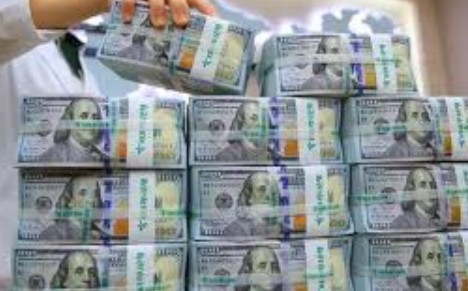
Baghdad, Iraq – The arrival of the first U.S. dollar cash shipment from the United States to Baghdad after a suspension period was not an ordinary banking event, but an economic moment carrying messages far greater than the shipment’s nominal value. In a country whose economy depends almost entirely on oil, the flow of dollars becomes part of daily financial security, and any interruption can quickly unsettle markets and increase exchange-rate sensitivity.
The Iraqi government confirmed that the shipment arrived after air traffic stabilized and political tensions in the region eased, a clear sign that the Iraqi economy is influenced not only by supply and demand factors, but also by geopolitical developments, air corridors, and international decisions.
Although officials clarified that these shipments represent only around 5% of the total cash liquidity required, while the Central Bank of Iraq holds the majority in its reserves, the importance of the news lies more in its symbolism than in the actual figure. Continued dollar inflows mean the artery of foreign trade remains open, as Iraq relies on the U.S. currency to finance imports, settle payments, and stabilize the exchange market.
Economically, the resumption of shipments sends three key signals. First, that the Central Bank of Iraq still has the operational capacity to manage liquidity and prevent sudden shortages in the market. Second, that commercial demand for dollars will remain covered, reducing the chances of an expanding parallel market. Third, and perhaps most importantly, it sends a psychological message of reassurance that financial ties with the United States remain stable.
Yet beneath this calm lies a deeper dilemma. The fact that part of Iraq’s liquidity depends on external mechanisms reveals how reliant the country remains on a financial system it does not fully control. Any political disruption, regional escalation, or change in banking compliance rules could quickly translate into domestic pressure on the Iraqi dinar and consumer prices.
This is Iraq’s real challenge: not merely securing dollars, but building an economy that does not shake every time a cash plane is delayed or a region enters crisis. Strong nations are measured not only by the size of their reserves, but by their ability to access them without fear.
Economic Studies Unit – North America Office
Center for Linkage Studies and Strategic Research