
BY: Shatha kalel
The confrontation between Iran and the United States is no longer merely a limited military tension in the Middle East. It has evolved into a global economic crisis threatening the stability of markets, energy supplies, and international trade. With every new military escalation, fears continue to grow that the world may be entering a far more dangerous phase capable of reshaping the global economic landscape entirely.
Recent developments following American strikes inside Iran, and the Iranian Revolutionary Guard’s response targeting a U.S. airbase, have pushed global markets into a state of deep anxiety, especially because the crisis is closely tied to the Strait of Hormuz, one of the world’s most critical oil routes. This strait is not simply an ordinary waterway; it is a vital artery through which a significant portion of global oil exports from the Arabian Gulf passes. Therefore, any threat to navigation in this area directly impacts oil and energy prices worldwide.
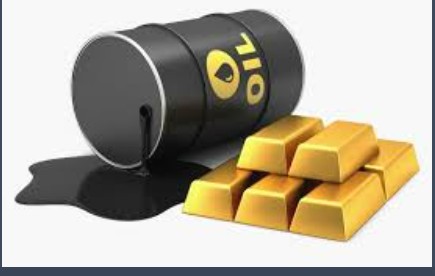
Within only a few hours of the escalation, oil prices jumped by more than 3%, approaching $100 per barrel. This sharp increase reflects the level of fear within financial markets over the possibility of a broader conflict or disruptions to oil supplies. Markets do not react only to current realities, but also to potential future scenarios. If tensions continue or expand into wider confrontations, the world could face a new energy crisis similar to the major crises experienced in previous decades.
However, the real danger lies not only in rising oil prices, but in the chain of economic consequences that may follow. Every increase in energy prices automatically raises transportation, industrial, and production costs, which later affects food prices, goods, and services across the globe. This means that global inflation, from which many economies have not yet fully recovered, could return with greater force in the coming period.
Amid these fears, the U.S. dollar has begun rising again as investors turn toward it as the primary safe haven, while gold has come under unexpected pressure despite the escalating geopolitical tensions. Normally, gold rises during wars and crises, but this time the equation has changed due to expectations of higher U.S. interest rates. As inflation rises, the likelihood increases that the U.S. Federal Reserve will keep interest rates elevated for a longer period, or possibly raise them again, strengthening the dollar and placing further pressure on gold prices.
Global markets today are living in a state of cautious anticipation because investors understand that the current crisis is not only about Iran and America, but about the future of the global economy itself. The world has become more interconnected than ever before, and any disruption in the Gulf region can affect stock markets, currencies, food supplies, and energy markets across Asia, Europe, and America within hours.
The current crisis also exposes the fragility of the global economic system in the face of geopolitical conflicts. Despite enormous technological and economic progress, oil and energy still remain the backbone of the global economy. This is what makes the Middle East, particularly the Gulf region, an extremely sensitive center in any international confrontation.
Even more dangerous is the possibility that continued tensions may push the world into a new phase of economic and political division. Several international powers have already begun reconsidering their alliances, energy sources, and global supply chains. Rising oil prices could also slow global economic growth and increase pressure on poorer countries and fragile economies heavily dependent on imported energy.
While the world attempts to avoid a full-scale war, the economic battle appears to have already begun. Modern wars are no longer fought only with missiles and aircraft; they are increasingly fought through oil, energy, sanctions, currencies, and interest rates.
Therefore, the most important question today is no longer whether the military confrontation will continue, but rather: how long can the global economy withstand the consequences of this escalation?
The world now stands before a crisis that may not only change oil and gold prices, but may also reshape international economic and political balances for many years to come.
Economic Studies Unit – North America Office
Center for Linkage Studies and Strategic Research