
By : Shatha Kalel
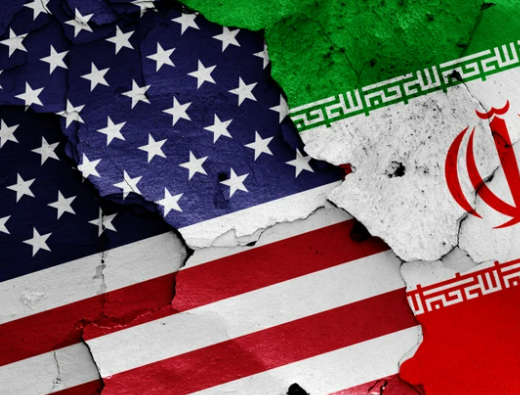
The latest American strikes on Iran’s Qeshm Island have pushed the confrontation between Washington and Tehran into a new phase of escalation, raising an economic question that extends far beyond the battlefield: How long can the global economy withstand continued instability in the Strait of Hormuz? Although US officials have described the operation as limited and defensive, its potential economic consequences reach well beyond the targeted island, given the strait’s strategic position as one of the world’s most important energy and trade corridors. Before the conflict, approximately 20 million barrels of oil and petroleum products passed through the waterway daily, equivalent to nearly one-fifth of global petroleum consumption. This makes any disruption to maritime traffic a direct source of concern for international markets. The situation becomes even more serious because alternative pipelines and transportation routes have limited capacity to replace the volumes normally shipped through the strait. The real economic danger, therefore, does not necessarily lie in the destruction of oil facilities or the immediate interruption of production, but in the transformation of geopolitical uncertainty into a persistent economic cost, reflected in higher maritime insurance premiums, delayed tanker movements, disrupted commercial contracts, and rising energy and transportation expenses. If international shipping companies begin treating the Strait of Hormuz as an increasingly unreliable commercial corridor, the financial consequences could spread throughout the global economy even without a large-scale military escalation. In this sense, limited military strikes could become a catalyst for a broader repricing of economic risk, making the duration of instability potentially more damaging than the scale of individual military operations.
The immediate economic consequences of the crisis are likely to emerge in energy markets, international transportation, and inflation. Oil prices respond not only to actual supply shortages but also to market expectations regarding potential future disruptions. If maritime instability persists, crude oil prices could experience sharp increases, particularly if investors conclude that diplomatic negotiations are unlikely to restore secure and reliable passage. Under a severe escalation scenario, oil prices exceeding $120 per barrel would be conceivable, although this represents a conditional possibility rather than a confirmed price forecast. The effects of rising energy prices would not be limited to gasoline and diesel; they would extend to electricity generation, petrochemicals, aviation, manufacturing, and agricultural production before eventually reaching consumers through higher food prices, more expensive imported goods, and increased industrial production costs. This raises the possibility of renewed stagflation, a particularly dangerous economic condition characterized by slowing growth alongside persistent inflation. Central banks would consequently face a difficult policy dilemma: maintaining elevated interest rates could further weaken economic activity, while reducing rates prematurely could reignite inflationary pressures. Asian economies, particularly China, India, Japan, and South Korea, would face significant exposure because of their reliance on Gulf energy supplies. European economies could experience higher liquefied natural gas prices and additional disruptions to international supply chains. Even the United States, despite its substantial domestic oil and gas production, would not be immune, since energy prices are determined within interconnected global markets. A prolonged Hormuz crisis could therefore undermine international efforts to control inflation, complicate monetary policy decisions, and expose the global economy to renewed financial and industrial pressures.
Across the Middle East, the economic consequences could be even more complex, with significant differences among individual countries. Gulf oil exporters might theoretically benefit from higher international crude prices, but those gains would diminish if restrictions on maritime traffic continued to reduce export volumes. Iraq stands out as one of the economies most exposed to these risks because of its heavy dependence on oil revenues to finance the national budget, public-sector salaries, and government investment. Higher oil prices would provide insufficient compensation if the country were unable to export adequate quantities of crude to international markets. Saudi Arabia and the United Arab Emirates, despite possessing alternative pipeline infrastructure capable of transporting part of their oil exports, cannot fully replace their normal maritime export capacity through the Gulf. Qatar faces a different challenge because its liquefied natural gas exports depend heavily on secure passage through the Strait of Hormuz, making maritime stability essential to meeting its international supply commitments. Iran, meanwhile, confronts a particularly difficult economic contradiction: using the strait as an instrument of political and military pressure may strengthen its negotiating position, but prolonged disruption could simultaneously undermine export revenues, discourage investment, and intensify pressure on its domestic economy. Over the longer term, the crisis could encourage shipping companies, energy corporations, and governments to reconsider their commercial strategies by diversifying import sources, expanding strategic petroleum reserves, investing in alternative pipelines and transportation corridors, and reducing dependence on high-risk maritime routes. Such developments could produce a structural transformation in the international economy, in which supply security becomes more important than economic efficiency and cost reduction, potentially increasing the long-term cost of globalization and international trade.
Against this background, three major scenarios can be identified for the future of the crisis and its economic implications. The first involves successful Qatari and Pakistani mediation leading to a political understanding, military de-escalation, and the gradual restoration of maritime traffic through the Strait of Hormuz. This would represent the most favorable outcome for the global economy, allowing oil risk premiums, shipping insurance costs, and transportation expenses to decline while restoring a degree of confidence to international markets. Nevertheless, a complete economic recovery would likely require more time than the physical reopening of the waterway. The second scenario, which deserves particular attention from economic policymakers, involves a prolonged but limited confrontation marked by intermittent military strikes, partial restrictions on maritime traffic, and repeated rounds of negotiations without a comprehensive settlement. Under these conditions, the global economy could face persistent energy-price volatility, declining investment, pressure on emerging-market currencies, and recurring inflationary shocks, weakening prospects for international economic growth. The third and most dangerous scenario would involve an expansion of military operations targeting major energy infrastructure or commercial shipping on a larger scale. Such a development could trigger a severe global supply shock, increase recession risks, and place considerable pressure on financial markets. Yet the central economic conclusion is that the duration of insecurity in the Strait of Hormuz may ultimately prove more damaging to the global economy than the intensity of individual military strikes. Governments can respond to temporary disruptions through strategic reserves and emergency logistical measures, but they face far greater challenges when geopolitical risks become persistent enough to influence investment decisions, trade relationships, and inflation expectations. Washington and Tehran therefore confront an economic reality that military calculations alone cannot resolve: controlling a strategic maritime passage does not mean controlling the financial consequences of destabilizing it. Unless diplomatic negotiations establish a credible and lasting framework for secure navigation, the Strait of Hormuz could evolve from a regional military flashpoint into one of the most serious structural vulnerabilities facing the global economic system.
Economic Studies Unit – North America Office
Al-Rawabet Center for Research and Strategic Studies